Breaker Keeps Tripping? Causes, Safe Fixes & Cost | Home Electrician Service
Breaker Keeps Tripping? 9 Causes, Safe Checks, and When to Call an Electrician
Updated October 2026
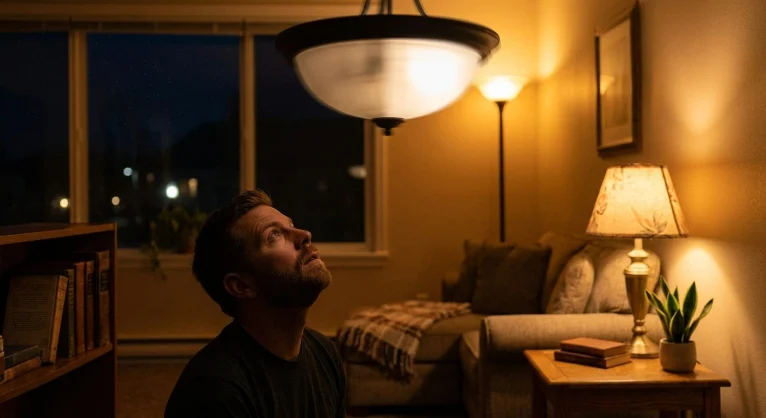
If your breaker keeps tripping, your electrical system is trying to tell you something. A circuit breaker is a safety device. It shuts power off when a circuit draws too much current or detects a fault, and that protects your wiring from overheating.
Click the Call Now button below and we’ll connect you with an independent, licensed electrician in your area. Or keep reading to find the likely cause, the safe checks you can try, and the signs that mean you should stop and call.
Free to call. Electricians are independent, licensed professionals who give their own quotes. Coverage varies by area, so tell us your location.
Stop and read this first. If you smell burning, see scorch marks, hear buzzing or crackling from the panel, or feel heat from a breaker or outlet, stop using that circuit and keep everyone away from the panel. Do not remove the panel cover. If there is smoke, sparks, or fire, leave the building and call 911 first.
Is a Tripping Breaker Dangerous?
Sometimes it is just an overloaded circuit. Other times it points to a short circuit, a ground fault, or a failing connection that can overheat. You can’t tell which from the breaker alone.
The breaker itself isn’t the enemy. It is doing its job. The danger comes from ignoring it or overriding it. Here are the pain points we hear most:
- “Is my house a fire risk?” A repeated trip can be a warning sign, and it deserves a real answer.
- “It trips every time I run the microwave or the AC.” That is a classic overload, but it may also mean the circuit is undersized or worn.
- “I keep resetting it.” Resetting over and over without finding the cause is how small problems get bigger.
- “I don’t know who to trust.” It is hard to know which electrician is licensed and honest.
- “What will it cost?” People worry that a simple trip becomes an expensive panel job.
This guide covers all five. You’ll learn what each type of trip usually means, what’s safe to check, and when to get a professional.
Why Your Breaker Keeps Tripping: 9 Common Causes
A breaker trips for a handful of reasons. Here are the most common, from the simplest to the most serious.
1. An Overloaded Circuit
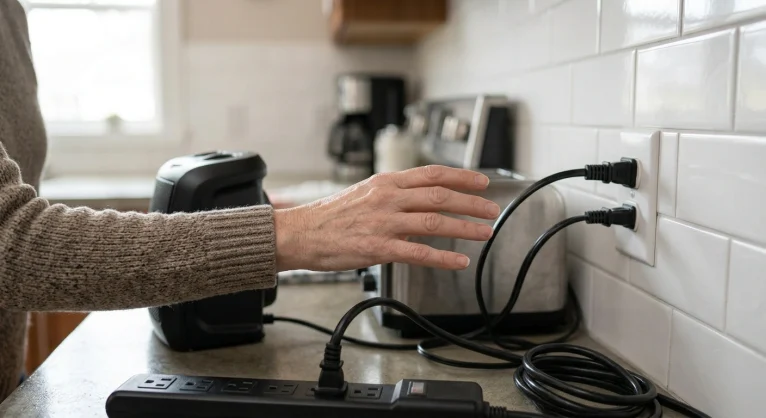
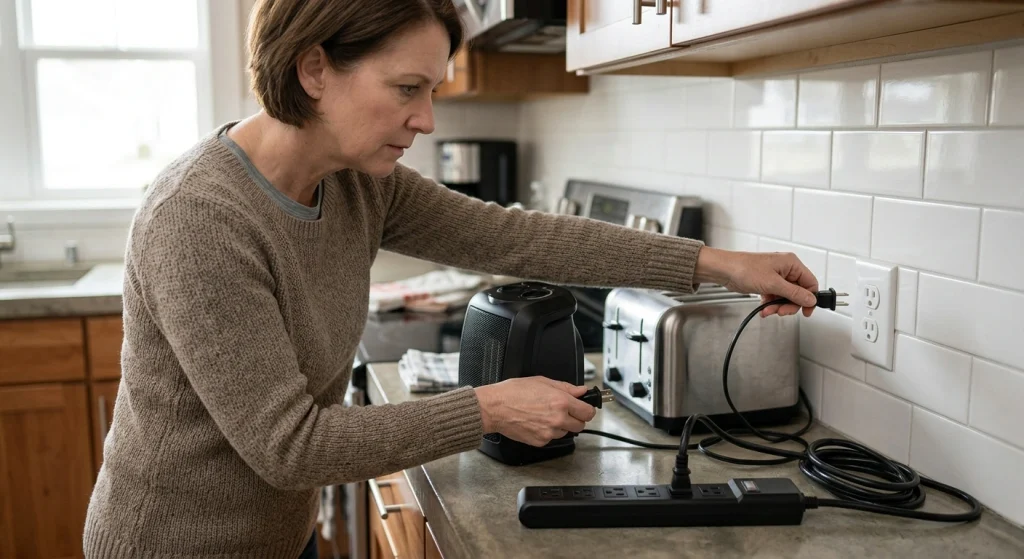
Too many devices on one circuit draw more current than the wire and breaker are rated for. Space heaters, hair dryers, microwaves, and toasters are common culprits. The breaker trips to protect the wire.
2. A Short Circuit
A hot wire touches a neutral or another hot wire, and current surges. A short trips the breaker instantly, often with a pop. Damaged cords, loose wires, and failed fixtures can cause it.
3. A Ground Fault
A hot wire touches a ground wire or a metal box, or current leaks through water. Ground faults are common in kitchens, bathrooms, garages, and outdoors. GFCI breakers and outlets trip to prevent shock.
4. An Arc Fault
Damaged or loose wiring can create small electrical arcs that generate heat. AFCI breakers are designed to detect this. A repeated AFCI trip is a warning, not a nuisance.
5. A Faulty Appliance or Device
A failing refrigerator, dishwasher, window AC, or power tool can trip a breaker by itself. If the breaker trips only when one device runs, that device is the first suspect.
6. A Worn or Damaged Breaker
Breakers don’t last forever. Heat, age, and repeated tripping can weaken the internal mechanism, so it trips at lower loads, or feels loose, warm, or won’t stay on. An electrician can test it and replace it.
7. A Loose Connection
A loose wire at the breaker, an outlet, or a switch creates resistance and heat. That can trip a breaker or damage it. It is also a fire risk, which is why a repeat trip is worth a professional look.
8. Moisture or Water Intrusion
Rain, a leak, or a damp outdoor outlet can cause ground faults and trip breakers, especially in humid North Alabama summers. Moisture in outdoor boxes, garages, and crawl spaces is a common cause.
9. An Aging or Undersized Panel
Older panels and homes with added loads, such as EV chargers, hot tubs, or extra appliances, can run out of capacity. When the whole system is strained, breakers trip more often. Learn more in our guide to electrical panel upgrades in Huntsville.
When Does the Breaker Trip? What It Usually Means
The timing is a big clue. Use this table to narrow it down:
| What happens | What it often means | What to do |
|---|---|---|
| Trips right away when you reset it | A short circuit or ground fault on the circuit | Leave it off and call an electrician |
| Trips after a few minutes or hours | An overload, or a worn breaker or connection | Unplug devices, and call if it repeats |
| Trips only when one appliance runs | A faulty appliance or an overloaded circuit | Stop using that appliance and test it elsewhere |
| Trips only when it rains | Moisture in an outdoor outlet, light, or wiring | Stay away from outdoor outlets and call |
| Trips only on hot days or when the AC starts | An overloaded circuit or a failing AC component | Call an electrician or an HVAC pro |
| Won’t reset at all | A serious fault or a failed breaker | Do not force it, and call an electrician |
| Feels hot, buzzes, or smells burnt | Loose connection or overheating | Stop using the circuit and call right away |
Need Help Finding the Cause? Click the Call Button
A tripping breaker is easy to guess at and hard to diagnose safely. Click the call button below, tell us what’s happening, and we’ll connect you with an independent, licensed electrician who can trace the cause.
Safe Checks You Can Try First
These steps are safe for most homeowners. Don’t open the panel cover, and don’t touch any wiring.
- Note what was running. Write down which appliances or lights were on when it tripped.
- Unplug everything on that circuit. Include power strips and chargers.
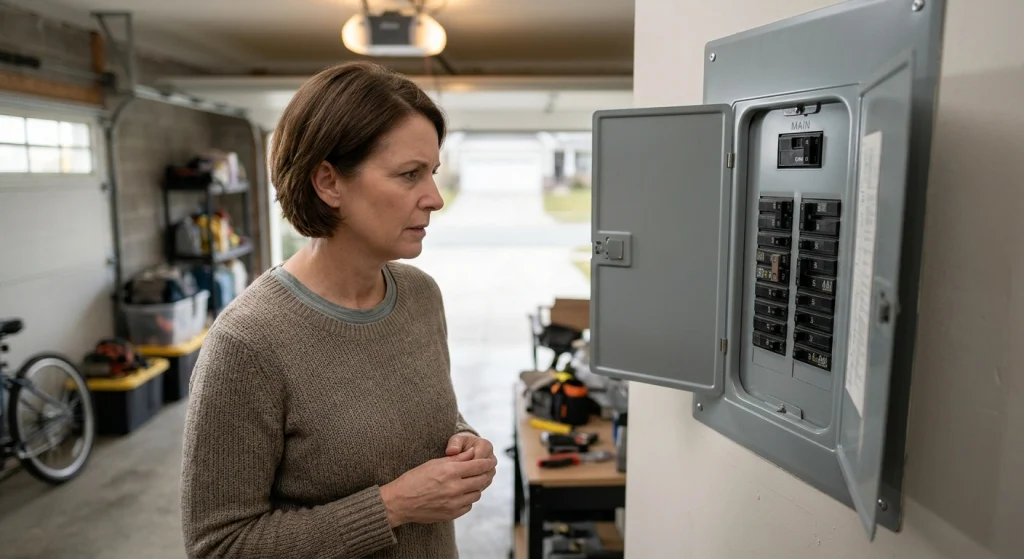
- Find the breaker. A tripped breaker is often in the middle position. Push it fully to OFF first, then back to ON. Use one firm motion.
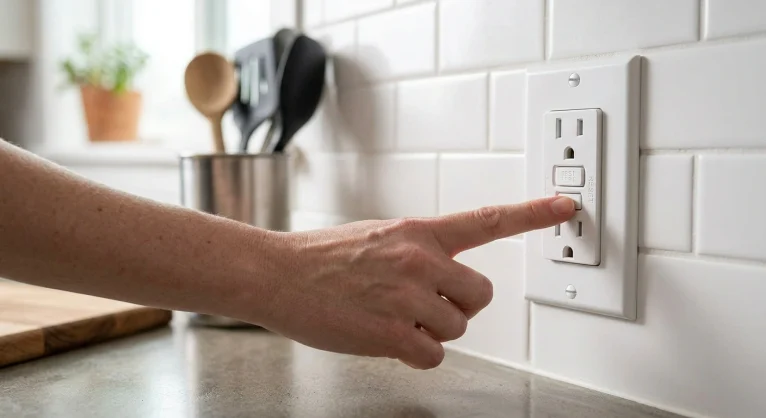
- Check GFCI outlets. Press Reset on bathroom, kitchen, garage, and outdoor GFCI outlets. A tripped GFCI can look like a dead circuit.
- Plug devices back in one at a time. If it trips when a specific device is plugged in, that device is the problem.
- Test the circuit with a light load. If it holds with a lamp, the earlier trip may have been an overload.
- Stop if it trips again. If it trips right away or keeps repeating, leave it off and call an electrician.
If you only get a trip when you run several large appliances at once, the fix may be as simple as moving one to a different circuit. If it keeps happening, there is more to find.
What NOT to Do When a Breaker Keeps Tripping
- Don’t hold the breaker on or tape it in place.
- Don’t replace it with a bigger breaker. The wire is sized for the original breaker, and a bigger one removes the protection.
- Don’t remove the panel cover. The inside of a panel carries live power even when the main breaker is off in some places.
- Don’t keep resetting it over and over without finding the cause.
- Don’t ignore heat, buzzing, or burning smells. These are signs to stop and call.
Warning Signs: Stop Using the Circuit
| What you notice | What it can mean | What to do |
|---|---|---|
| Burning smell near the panel or outlet | Overheating wire or connection | Leave the area. Call 911 if there is smoke |
| Scorch marks or discoloration | Heat damage or arcing | Stop using it and call |
| Buzzing or crackling from the panel | Loose connection or failing breaker | Keep away from the panel and call |
| Warm or hot breaker or outlet | Overload or loose connection | Turn off the circuit and call |
| Flickering lights with trips | A loose neutral or panel issue | Call an electrician promptly |
| Sparks when plugging in | Worn contacts or a fault | Stop using that outlet and call |
What a Licensed Electrician Does
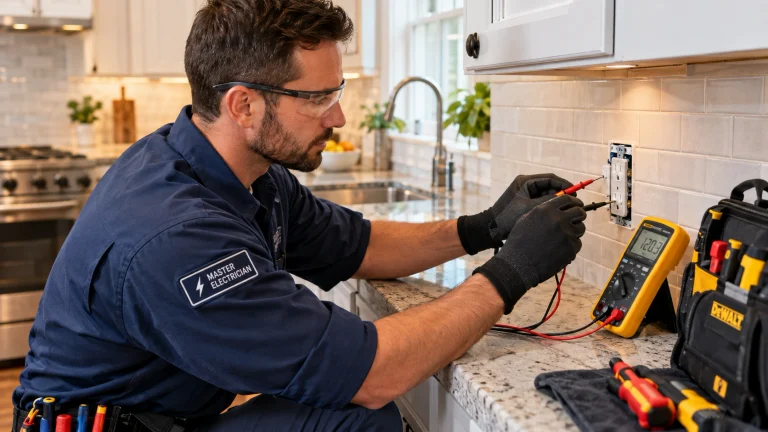
A professional doesn’t just reset the breaker. A good electrician will:
- Ask when and how the breaker trips
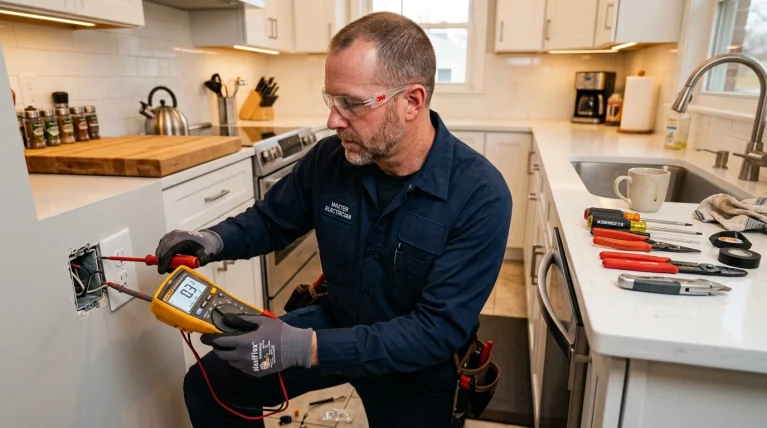
- Test the circuit for shorts, ground faults, and overloads
- Check the breaker, connections, and panel for heat damage
- Inspect outlets, switches, and appliances on the circuit
- Replace a worn or damaged breaker if needed
- Recommend a new circuit or a panel upgrade if the system is overloaded
- Explain the cause and give you a written price
If the problem is a worn breaker, our page on circuit breaker installation in Huntsville covers what to expect. If you’re worried about your whole system, an electrical safety inspection can show where the weak points are.
How Much Does It Cost to Fix a Tripping Breaker?
Costs depend on the cause. As a rough U.S. guide, which is a planning estimate and not a quote:
| Repair | Typical cost |
|---|---|
| Reset a breaker or GFCI yourself | $0 |
| Service call or diagnosis | $100 – $250 |
| Replace a worn breaker | $150 – $400 |
| Replace a GFCI or faulty outlet | $100 – $300 |
| Add or reroute a circuit | Quote required |
| 200-amp panel upgrade | $1,800 – $4,500 |
| Repair damaged wiring | Quote required (varies widely) |
Always ask for a written quote that lists the work, the parts, and any permit.
Ready for a Written Quote? Tap the Call Button
You don’t have to guess at the price. Tap the call button below, describe what’s happening, and ask the electrician for a written quote. There’s no pressure, and you decide whether to go ahead.
How to Know You Can Trust the Electrician
We are a referral service. We connect homeowners with independent electricians, and we don’t do the electrical work ourselves. Here is how to protect yourself, whoever you hire:
- Ask for the license number. Verify it with the Alabama Electrical Contractors Board.
- Ask for proof of insurance. Liability coverage protects your home.
- Get the price in writing. It should list the work, parts, and any permit.
- Ask what caused the trip. A good electrician explains the cause in plain English.
- Ask about a warranty. Know what covers the parts and what covers the labor.
If someone offers to just swap in a bigger breaker without checking the wire, or refuses to show a license, walk away.
Can You Fix a Tripping Breaker Yourself?
You can safely do the simple things: unplug devices, reset the breaker, press Reset on GFCI outlets, and move appliances to different circuits. Anything beyond that is a job for a licensed electrician.
- Replacing a breaker means working inside a live panel
- Tracing a short or ground fault needs test tools and training
- Repairing wiring in walls, attics, or crawl spaces can hide other damage
- Panel work often needs a permit and an inspection
Panel work is where most serious electrical injuries happen. It isn’t worth the risk.
How to Prevent Breaker Trips
- Don’t run several high-power appliances on one circuit
- Plug space heaters and microwaves into their own outlets
- Replace damaged cords and old appliances
- Test GFCI and AFCI devices once a month
- Keep outdoor outlets covered and dry
- Have older homes and panels inspected
- Plan ahead if you add an EV charger, hot tub, or new appliances
If you’re also dealing with dead outlets, see our guide to an electrical outlet not working. For a faster answer on a circuit that’s out but the breaker looks normal, read about an outlet that stopped working without a tripped breaker. For the full picture, our home electrician service page explains how referrals work, and our page on finding a local electrician in Huntsville can help if you’re in North Alabama.
How It Works
- Click the call button. Tell us your location and what’s happening.
- Get matched. We connect you with an independent, licensed electrician in your area, where coverage is available.
- Get a written quote. The electrician reviews the problem and quotes the price directly.
- Decide. You choose whether to hire them. No obligation.
Frequently Asked Questions
What should I do if my breaker keeps tripping?
Start by unplugging devices on that circuit and resetting it once. Common causes are an overloaded circuit, a short circuit, a ground fault, a faulty appliance, a worn breaker, or a loose connection. When and how it trips is the biggest clue. If it trips right after you reset it, call a licensed electrician.
Is it dangerous if a breaker keeps tripping?
It can be. A tripped breaker is the safety system doing its job, but repeated trips can point to a short, a ground fault, or an overheating connection. Never hold the breaker on or replace it with a larger one.
Why does my breaker trip right after I reset it?
That usually means a short circuit or ground fault on the circuit, or a faulty device still plugged in. Unplug everything and try again once. If it trips immediately, leave it off and call an electrician.
Can a circuit breaker go bad?
Yes. Breakers wear out from age, heat, and repeated tripping, and may trip at lower loads or feel loose or warm. An electrician can test and replace a worn breaker.
Can I replace a breaker myself?
It is not recommended. Replacing a breaker means working inside a live panel, which is dangerous. Call a licensed electrician.
Don’t Ignore a Breaker That Keeps Tripping
A breaker that trips once may be a harmless overload. If your breaker keeps tripping, it is asking for attention. The safest move is to find the cause, not to keep resetting the switch.
Whether it’s a worn breaker, an overloaded circuit, or a hidden wiring fault, a licensed electrician can find it, fix it, and give you a clear price. Click the Call Now button below to get started today.