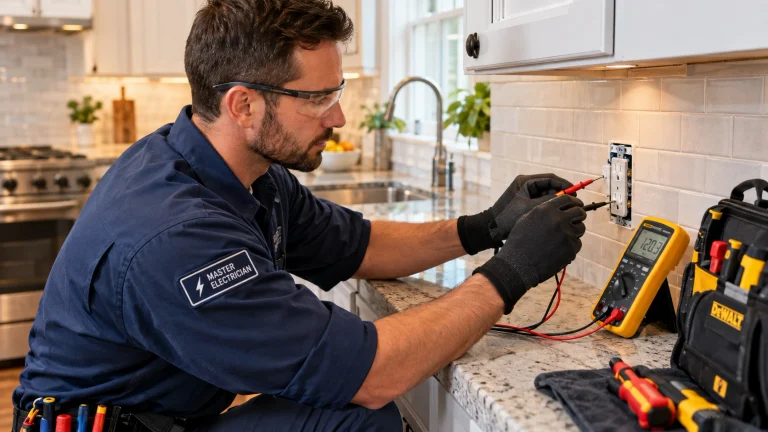
Electrical Outlet Not Working? Fast Repair & Safe Fixes
Electrical Outlet Not Working: Fast Troubleshooting & Safe Professional Repairs
You go to plug in a lamp, appliance, or phone charger, and nothing happens. Dealing with an electrical outlet not working is one of the most frustrating and surprisingly common problems homeowners face today. Whether it happened suddenly in a single room or spread across multiple receptacles, a dead wall socket disrupts your daily routine and leaves you wondering what went wrong behind the drywall.
While a minor issue like a tripped breaker can sometimes explain why you have an electrical outlet not working, this symptom often signals underlying electrical issues. Loose wire terminal connections, worn contact strips, tripped GFCI receptacles, or hidden thermal arcing can all cause power loss. Ignoring a non-functioning socket or relying on extension cords can quickly turn a minor inconvenience into a serious fire hazard.
Don’t leave your property vulnerable to electrical hazards or risk dangerous shocks with DIY attempts. Click the button below to call our licensed master electricians right now for fast, safe, and reliable same-day service!
🚨 NEED IMMEDIATE ELECTRICAL OUTLET REPAIRS?
Don’t let a dead or sparking wall socket put your home at risk. Our certified technicians are on standby to diagnose and repair your wiring quickly and safely.
Why Is Your Electrical Outlet Not Working? Common Causes
Understanding why an outlet loses power requires looking at how residential branch circuits operate. Electrical current travels from your main service panel through continuous series loops of copper wiring. When an electrical outlet not working interrupts this flow, the failure point is usually located in one of several key components.
Here are the primary causes our master electricians encounter when inspecting dead wall sockets in homes:
- Tripped Circuit Breaker: High power demands from heavy appliances can cause your panel breaker to trip to the center “off” position, instantly cutting off current to preserve wire integrity.
- Tripped Upstream GFCI Outlet: Ground Fault Circuit Interrupters (GFCIs) protect areas exposed to moisture. A tripped GFCI in a bathroom, garage, or kitchen can easily shut off standard outlets wired downstream in adjacent bedrooms or hallways.
- Loose Terminal Wire Connections: Physical stress from repeatedly inserting and removing tight plugs can cause terminal screws behind the outlet box to loosen, breaking the circuit connection.
- Worn Internal Contact Strips: Over years of continuous use, the internal metal wipers inside a receptacle stretch out. Loose contacts cause high resistance, poor current flow, and complete power failure.
- Failed “Backstabbed” Wiring: Outlets installed using quick-push “backstabbed” wire slots on the rear housing frequently fail over time as internal tension springs degrade and release conductors.
- Burned or Arced Receptacles: Hidden electrical arcing generates extreme heat, melting plastic housing components and destroying internal terminal blocks.
Diagnostic Breakdown: Identifying Outlet Failures
Use this diagnostic chart to evaluate the symptoms your home is experiencing and determine the best response:
| Observed Symptom | Primary Cause | Safety Risk Level | Recommended Action |
|---|---|---|---|
| Single electrical outlet not working | Loose terminal screw, backstab failure, or worn receptacle | Moderate | Have a licensed electrician inspect and replace the wall receptacle box. |
| Multiple outlets dead in one zone | Tripped upstream GFCI outlet or open breaker switch | Low to Moderate | Check main panel breakers and press “RESET” on all household GFCI outlets. |
| Socket warm to touch / discoloration | High-resistance arc connection, thermal melting | CRITICAL | Turn off main breaker immediately; call for emergency electrical repair. |
| Buzzing or crackling sounds from wall | Active electrical arcing behind wall plate | CRITICAL | Stop using circuit immediately and contact a certified electrician. |
| Breaker immediately trips when reset | Direct short circuit or ground fault in branch wiring | High | Do not force breaker lever; request professional diagnostic service right away. |
If you notice burning odors, heat, or unusual noises coming from a wall socket, do not attempt to use it. Click below to speak directly with an expert electrician today!
⚡ PROTECT YOUR HOME FROM HIDDEN WIRING HAZARDS
A dead socket can be a warning sign of loose wiring, thermal arcing, or overloaded circuits.
How to Safe-Test an Electrical Outlet Not Working
Before scheduling a service visit, perform these safe, non-invasive troubleshooting steps to determine whether you are dealing with a quick fix or a complex wiring fault.
Step 1: Test with a Secondary Appliance
Unplug the original device and plug a small, functional appliance (like a working table lamp) into both the top and bottom sockets. This rules out a damaged appliance cord or a dead appliance motor.
Step 2: Locate and Reset Upstream GFCI Receptacles
Check every GFCI outlet in nearby areas, including kitchens, bathrooms, laundry rooms, garages, and outdoor patios. Press the TEST button firmly, followed by the RESET button. Because builders loop standard outlets downstream from GFCIs for safety, resetting an upstream outlet often restores power immediately to an electrical outlet not working in another room.
Step 3: Inspect the Main Breaker Panel
Open your main electrical service panel and look for breaker levers positioned in the middle or full “OFF” position. To correctly reset a breaker, push the switch firmly to the OFF position until it clicks, then flip it back to ON.
Step 4: Check Light Switches in the Room
Many residential properties feature “half-hot” or fully switched wall receptacles designed for floor lamps. Ensure all light switches near room entryways are flipped on, as a wall switch may control power to the upper or lower socket.
Why Ignoring a Dead Outlet Poses Serious Risks
It is tempting to ignore a non-functioning outlet and use an extension cord from another room. However, leaving an electrical outlet not working unaddressed can create subtle hazards within your electrical panel and branch wiring:
- Thermal Arcing and Fire Hazards: Loose wire connections behind an outlet box can spark continuously as current attempts to bridge gap connections, generating heat levels capable of igniting drywall, insulation, or wooden studs.
- Overloaded Secondary Circuits: Running heavy appliances or multiple power strips off a single functional outlet strains that circuit, increasing the risk of voltage drops and tripped breakers.
- Widespread Circuit Failures: Because outlets are wired in continuous daisy-chain configurations, one failing receptacle connection can cause power outages across downstream sockets in adjacent rooms.
- Damage to Home Electronics: Unstable voltage supply caused by loose neutral wires or damaged contact strips can damage television circuitry, computers, and home appliances.
DIY Risks vs. Professional Electrician Services
While pressing a reset button on a GFCI is completely safe, opening electrical boxes and handling internal high-voltage conductors presents real safety hazards. Working with licensed master electricians ensures long-term safety and code compliance:
| DIY Electrical Repair Risks | Professional Electrician Benefits |
|---|---|
| ❌ Severe risk of electrocution, shock, and arc burns | ✅ Fully licensed, master-level safety and precision craftsmanship |
| ❌ Loose screw terminals causing hidden electrical fires | ✅ Comprehensive voltage, ground, and circuit continuity testing |
| ❌ Incorrect wire sizing or reversed polarity connections | ✅ Full adherence to National Electrical Code (NEC) standards |
| ❌ Potential home insurance claim denials for uncertified work | ✅ Transparent upfront flat-rate pricing and labor warranties |
Protect your household and leave internal wall wiring to trained, equipped experts. Click below to get connected with our local dispatch team immediately.
Our Simple 4-Step Outlet Repair Process
When you call our residential electrical team to solve an electrical outlet not working, we make the entire process smooth, fast, and transparent:
- Easy Call Scheduling: Click our phone link to connect directly with our dispatch staff. We set an appointment window that fits your schedule.
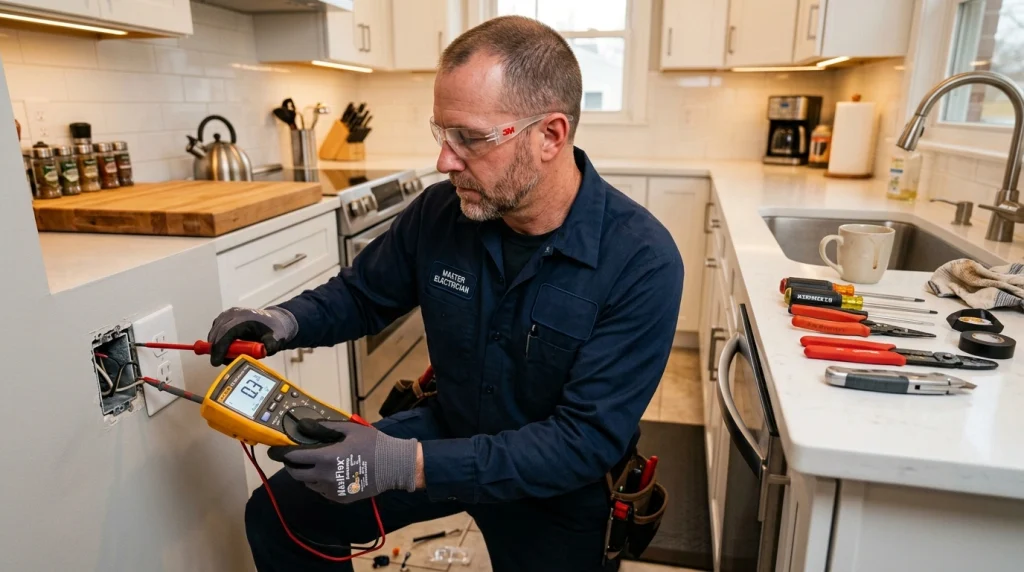
- Comprehensive Diagnostic Inspection: A certified electrician arrives on time, equips protective gear, and conducts diagnostic testing at your panel and receptacle.
- Upfront Flat-Rate Quote: We explain the exact cause of the outlet failure and present a clear, flat-rate quote before any repair work begins.
- Safe Repair & Final Testing: We replace worn receptacles, tighten all terminal connections, fit secure wall plates, and test the entire circuit for safety.
Frequently Asked Questions
Why would I have an electrical outlet not working if the breaker is not tripped?
If your panel breaker is operating normally, the most common causes are a tripped GFCI outlet upstream on the same branch circuit, loose wire terminals behind the outlet, or physical contact wear inside the receptacle housing.
Can a dead wall socket cause a house fire?
Yes. If an outlet stops working because of a loose terminal connection or internal thermal melting, dangerous electrical arcing can continue behind the wall plate, generating extreme heat that can ignite nearby structural materials.
How much does it cost to replace a non-functioning wall outlet?
Replacing standard wall sockets or upgrading to modern GFCI receptacles is a fast and affordable service. We conduct an initial diagnostic evaluation and provide a clear, upfront quote before starting any work so you know the exact cost.
Is it safe to leave a non-functioning outlet alone until I can fix it?
If the socket failed due to a tripped GFCI button, it is generally safe. However, if the issue stems from loose wiring or burnt contacts, it presents an ongoing hazard. We recommend shutting off the breaker for that circuit until a licensed electrician can inspect it.
Why are my electrical plugs falling out of the wall socket?
When internal metal contact wipers stretch out from years of use, they lose physical tension. Loose contacts increase electrical resistance, causing sockets to heat up and lose power, which means the receptacle needs immediate replacement.
Restore Power to Your Home Safely—Call Us Today!
If you are dealing with an electrical outlet not working in your home, don’t leave your property’s safety to guesswork. Our team of background-checked master electricians is ready to diagnose your wiring issues, replace worn wall sockets, and make sure your electrical distribution system operates safely.
We take pride in providing rapid response times, clean workmanship, and upfront pricing on every job.
Don’t wait for a dead socket to turn into an expensive wiring emergency. Click the button below to call our office staff and schedule your outlet repair today!
📞 READY TO FIX YOUR DEAD WALL SOCKETS?
Our expert electricians are standing by to restore safe, reliable power to your home!