Why Would a Wall Socket Stop Working? | Expert Troubleshooting Guide
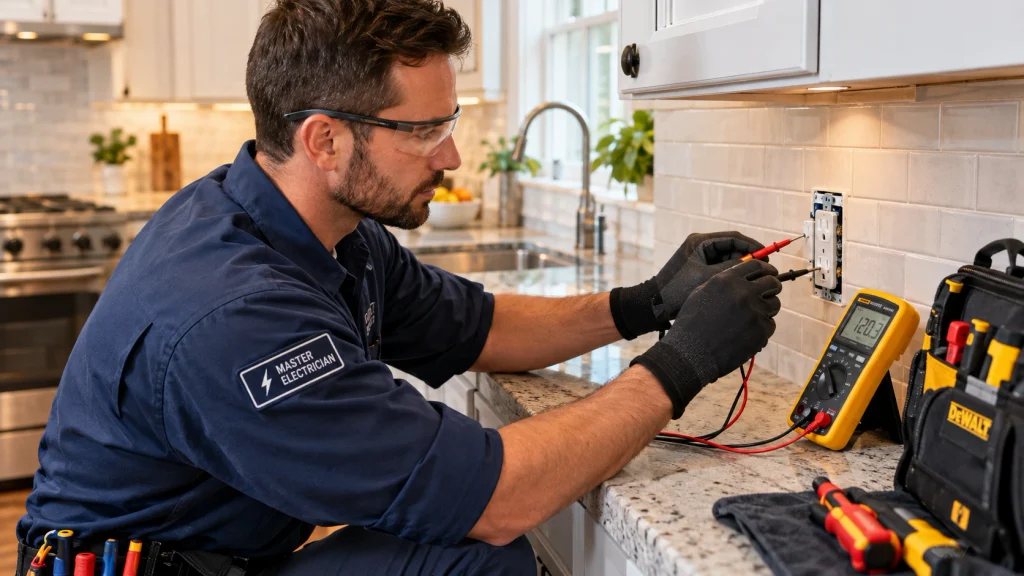
You plug in your phone charger, coffee maker, or lamp, and suddenly—nothing happens. When a power outlet abruptly loses juice, it can derail your daily routine and leave you asking: why would a wall socket stop working out of nowhere? While a dead outlet can sometimes be traced to a simple tripped circuit breaker, it can also point to hidden electrical hazards like loose wire connections, burnt receptacles, or tripped GFCI outlets located elsewhere in your home.
Electrical issues are more than just an inconvenience—they represent potential safety risks if ignored. Behind your drywall, aging wiring and worn terminal connections can overheat, arcing quietly and creating severe fire risks. Understanding what causes an outlet to fail helps you respond safely and know when it’s time to call in a professional master electrician.
Don’t leave dead outlets to chance or risk dangerous DIY electrical shock. Click the button below to call our licensed residential electricians right now and get your power restored safely today!
Common Reasons Why a Wall Socket Stops Working
Residential electrical distribution systems rely on continuous, unbroken electrical circuits running from your main service panel through various junction boxes and wall receptacles. When a single receptacle suddenly loses power, the breakdown typically stems from one of several distinct points in the circuit.
If you are trying to figure out why a single socket or an entire room’s outlets have gone dark, these are the most common culprits our licensed electricians encounter in the field:
- Tripped Circuit Breaker: The main electrical panel detects an overload or short circuit and trips the breaker lever to the center “off” position to prevent overheating.
- Tripped GFCI Outlet: Ground Fault Circuit Interrupters protect wet areas like kitchens and bathrooms. A tripped GFCI outlet upstream can cut power to multiple downstream outlets on the same circuit.
- Loose Wire Terminals: Over years of plugging and unplugging heavy appliances, physical wire connections behind the outlet wall plate can loosen or detach from the terminal screws.
- Burned or Damaged Receptacle: Internal metal contact strips can wear out, gap open, or melt due to excessive heat build-up, cutting off conductivity entirely.
- Faulty Backstabbed Wiring: In many homes, quick-connect “backstabbed” wire pushes behind outlets loosen over time, causing intermittent loss of power or complete circuit failure.
Quick Diagnostic Troubleshooting Table
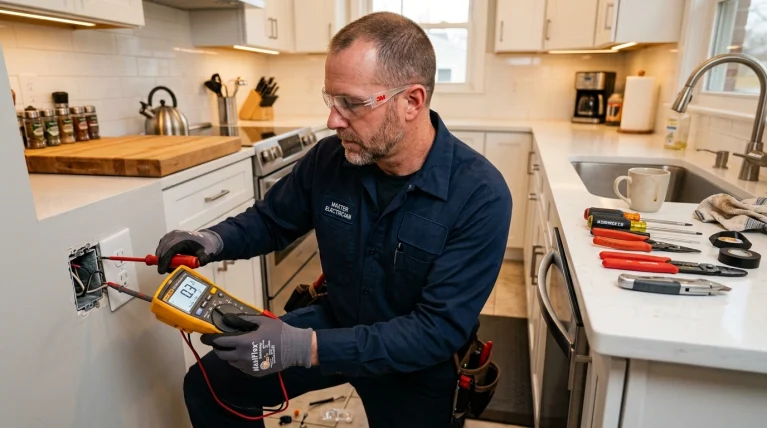
Use this diagnostic chart to evaluate the symptoms your dead wall socket is showing and understand the recommended course of action.
| Observed Symptom | Likely Electrical Cause | Risk Level | Recommended Action |
|---|---|---|---|
| Single Dead Outlet (Rest of Room Works) | Loose terminal screw, backstab failure, or worn contacts | Moderate | Have a certified electrician replace the outlet box |
| Multiple Dead Outlets in One Area | Tripped GFCI receptacle upstream or tripped breaker | Low-Moderate | Check panel breakers and press “Reset” on GFCI outlets |
| Outlet Warm to Touch or Discolored | High-resistance arc connection, thermal melting | CRITICAL | Turn off panel breaker immediately; call for emergency repair |
| Buzzing or Popping Noise When Plugged In | Active electrical arcing behind wall plate | CRITICAL | Stop using socket immediately; request professional diagnostic |
| Breaker Instantly Retrips When Reset | Direct ground fault or short circuit in wall wiring | High | Do not repeatedly force breaker; call an electrician right away |
If your outlet shows signs of burning, heat, or noise, do not attempt to use it. Click below to speak directly with a licensed electrician today!
Step-by-Step Electrical Troubleshooting: Why Would a Wall Socket Stop Working?
Before calling out our service technicians, there are a few simple and safe checks you can perform to determine the root cause of your dead outlet.
1. Test the Plugged-In Device
First, verify that the issue lies with the wall socket itself rather than the device you are trying to power. Unplug your device and test it in a known working outlet elsewhere in your home. If it works there, the issue is definitely isolated to the dead receptacle circuit.
2. Check and Reset Upstream GFCI Outlets
Many homeowners are surprised to learn that an outlet in a bedroom, dining room, or hallway is wired downstream from a GFCI outlet located in a nearby bathroom, kitchen, garage, or outdoor patio. Inspect all GFCI outlets in surrounding areas, press the “TEST” button, and then firmly press “RESET.” This simple action often restores power instantly.
3. Inspect Your Main Circuit Breaker Panel
Head to your main electrical panel and check for any circuit breaker levers that have shifted to the middle position or completely to the “OFF” side. To reset a tripped breaker, push the switch firmly all the way to the “OFF” position first until you hear a clear click, then switch it back to “ON.”
4. Check for Switched Outlets
In many modern and older residential homes, wall receptacles are installed as “switched outlets” designed to control floor lamps. Check wall light switches near the entryway of the room to ensure a switch hasn’t been accidentally turned off, cutting top or bottom power to the outlet.
5. Inspect for Thermal Damage and Loose Connections
Visually inspect the face of the outlet for any scorch marks, melted plastic around the slot openings, or discolored faceplates. If you detect a burnt smell or visible heat damage, keep the breaker off and do not attempt to use the socket.
The Hidden Dangers of Ignoring a Dead Wall Socket
It can be tempting to simply ignore a dead outlet and plug your electronics into another wall socket using an extension cord. However, a dead socket is frequently a symptom of an active electrical problem within your home’s wiring system.
Neglecting a malfunctioning outlet can lead to serious risks over time:
- Hidden Electrical Arcing: Loose wire connections can create microscopic electrical arcs that generate intense heat (exceeding 10,000°F), igniting surrounding wooden studs or insulation.
- Overloading Secondary Circuits: Relying on extension cords and power strips to bypass dead outlets strains neighboring circuits, causing frequent breaker trips and voltage drops.
- Complete Room Power Loss: Because residential outlets are often wired in a series (“daisy chain”), one failing outlet connection can eventually cut power to every downstream receptacle in the room.
- Damage to Sensitive Electronics: Voltage fluctuations, loose neutrals, and poor contacts can send unstable current into expensive computers, TVs, and home appliances.
DIY Repairs vs. Professional Electrician Services
While checking a circuit breaker or pressing a GFCI reset button is safe for any homeowner, unscrewing wall plates and working with internal high-voltage wiring carries significant personal safety hazards. Here is why hiring a licensed master electrician is always the safest option:
Risks of DIY Electrical Repairs
- ❌ Severe risk of electrocution, arc flash, and shock
- ❌ Improper wire gauge selection causing fire hazards
- ❌ Miswiring hot and neutral terminals (Reverse Polarity)
- ❌ Voiding home insurance coverage due to uncertified work
Our Professional Electrical Services
- ✅ Licensed, master-level diagnostic precision & safety
- ✅ Complete voltage, ground, and circuit continuity testing
- ✅ Full NEC code compliance and high-grade materials
- ✅ Upfront pricing with comprehensive labor warranties
Protect your family and property by leaving internal wall repairs to our licensed professionals. Click below to get connected with our local dispatch team immediately.
Our Straightforward Outlet Repair Process
When you choose our residential electrical team to repair your wall sockets, we ensure a seamless, stress-free experience from start to finish.
- Step 1: Simple Scheduling: Click our phone link to connect with our dispatch center. We schedule an appointment that fits your calendar.
- Step 2: Thorough On-Site Inspection: Our certified electrician arrives on time, equips personal protective gear, and conducts diagnostic testing at the panel and receptacle.
- Step 3: Upfront Flat-Rate Quote: We explain the exact cause of the outlet failure and provide a clear, upfront quote before starting any work.
- Step 4: Safe Repair & Testing: We replace worn components, secure screw connections, replace broken faceplates, and thoroughly test circuit operation.
Frequently Asked Questions About Dead Wall Sockets
- Why would a wall socket stop working if the breaker isn’t tripped?
-
If your breaker panel looks completely normal, the most likely cause is a tripped GFCI outlet located upstream on the same circuit, a loose “backstabbed” wire terminal connection behind the outlet box, or internal contact failure inside the physical receptacle itself.
- Can one dead wall socket cause a house fire?
-
Yes. If the socket stopped working due to a loose wire terminal, high-resistance connection, or thermal breakdown, electrical arcing can continue behind the wall plate, generating extreme heat capable of starting a fire.
- How much does it typically cost to fix or replace a dead wall outlet?
-
Replacing a standard wall receptacle or GFCI outlet is a fast and affordable service. We provide a complete on-site diagnostic check and present a clear, flat-rate price quote before work begins so there are never any hidden costs.
- Is it safe to leave a dead outlet alone until I can get it fixed?
-
It depends on the cause. If the outlet died due to a tripped GFCI, it is generally harmless. However, if it died due to loose wiring or burning contacts, it poses a risk. We recommend turning off the corresponding circuit breaker at your main panel until a certified electrician can inspect it.
- Why do my plugs feel loose or fall out of my wall sockets easily?
-
Over years of continuous use, the internal spring-tension metal contacts inside the receptacle wear out and widen. Loose outlets create high electrical resistance and sparking, indicating it is time to replace the receptacle immediately.
Restore Power to Your Home Safely—Call Us Today!
If you are frustrated by dead receptacles or wondering why would a wall socket stop working in your home, don’t leave your electrical safety to guesswork. Our team of certified, background-checked master electricians is ready to diagnose your wiring issues, replace worn outlets, and ensure your home’s power distribution system operates flawlessly.
We pride ourselves on rapid response times, clean workmanship, and upfront pricing on every single job.
Don’t wait for a minor outlet issue to turn into a costly electrical emergency. Click the button below to call our office staff and schedule your outlet repair today!