Outlet Hot to Touch? Causes, What’s Normal & What to Do | Home Electrician Service
Outlet Hot to Touch? Why It Happens, What’s Normal, and When to Call an Electrician
Updated October 2026
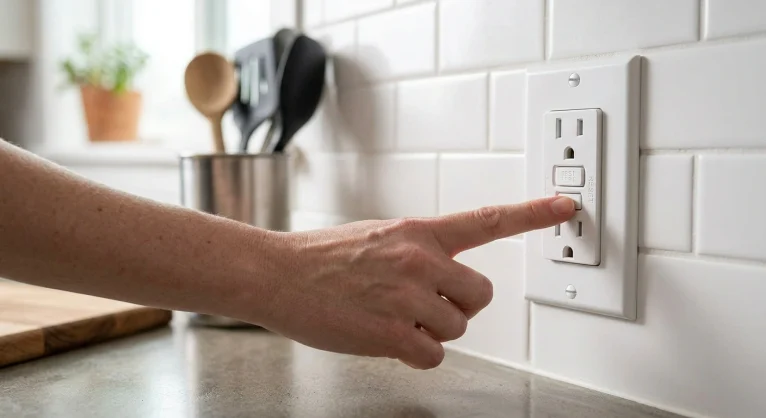
Finding an outlet hot to touch is unsettling, and it should be. A little warmth from a device that draws a lot of power can be normal. But an outlet or cover plate that feels hot can also mean a loose connection or overload that creates a fire risk.
Click the Call Now button below and we’ll connect you with an independent, licensed electrician in your area. Or keep reading to learn the difference between warm and dangerous, the common causes, and what to do right now.
Free to call. Electricians are independent, licensed professionals who give their own quotes. Coverage varies by area, so tell us your location.
Do this now if the outlet is hot. Unplug what you can safely unplug, without touching the outlet face. Turn off the breaker for that circuit if you can reach the panel safely. Do not use the outlet again until an electrician checks it. If you see smoke, scorching, melting, or sparks, leave the building and call 911 first.
Is It Normal for an Outlet to Feel Warm?
Sometimes. A device that draws a lot of current, like a space heater, a hair dryer, or a window AC, can make the plug and the outlet slightly warm. That is not always a problem.
But there is a big difference between slightly warm and hot. If an outlet feels warm with nothing plugged in, or too hot to keep your hand on, treat it as a warning sign.
Here is a quick way to think about it:
| What you notice | Often means | What to do |
|---|---|---|
| Slightly warm plug or cover while a heater or hair dryer runs | A high-power device drawing a lot of current | Check the device and circuit load, and watch it |
| Warm outlet with nothing plugged in | A loose connection or a wiring problem | Stop using it and call an electrician |
| Too hot to keep your hand on | Overheating at the outlet | Turn off the breaker and call right away |
| Discoloration, scorch marks, or melting | Heat damage or arcing | Leave it off, and call 911 if there is smoke |
| Burning or plastic smell | Overheated components | Turn off the circuit and call urgently |
| Buzzing, crackling, or sparking | Arcing at a loose connection | Stop using the outlet and call |
When in doubt, don’t keep using it. A quick check by a licensed electrician costs far less than a fire.
Why Is My Outlet Hot to Touch? 8 Common Causes
An outlet hot to touch usually comes down to heat building up where the electrical connection is weak or overloaded. Here are the common causes.
1. A Loose Wire Connection
Wires attach to the outlet with screws or push-in clips. Over the years, connections can loosen. A loose connection resists the flow of electricity, and that resistance creates heat. This is one of the most common reasons for a hot outlet.
2. Push-In (Back-Stabbed) Wiring
Many builders use outlets with push-in holes on the back instead of screw terminals. Those connections can loosen or wear faster and run hot under load. An electrician may move the wires to the screw terminals or replace the outlet.
3. An Overloaded Outlet or Circuit
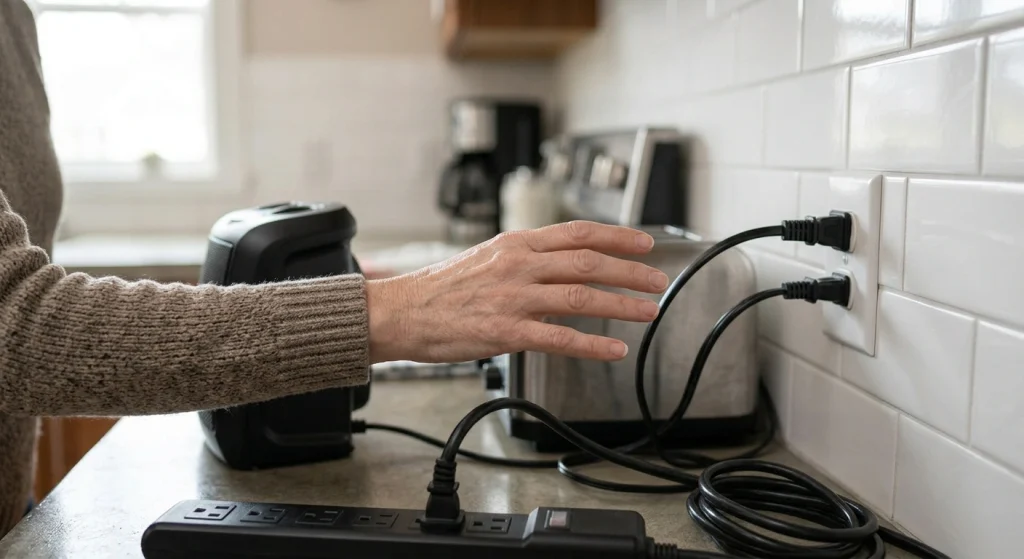
Plugging several high-power devices into one outlet or power strip draws more current than it should. Space heaters, toasters, and air fryers are common culprits. The extra current heats the outlet and the plug.
4. A Worn or Damaged Outlet
Outlets wear out. If plugs fit loosely, fall out, or the outlet face is cracked, the contacts don’t grip well. That makes poor contact, resistance, and heat.
5. A Damaged Plug or Cord
A bent prong, a frayed cord, or a worn plug can overheat and warm the outlet. If the plug is hotter than the outlet, check the device first.
6. A Faulty Appliance
A failing appliance can draw too much current. If the outlet is only hot when one device is plugged in, that device is the first suspect.
7. Aluminum Wiring in Older Homes
Some homes built in the 1960s and 1970s have aluminum branch wiring. It expands and contracts more than copper and can loosen at outlets, creating heat. This needs a licensed electrician, not a DIY fix.
8. A Wiring Fault Behind the Wall
A damaged wire, a bad splice, or a failing connection elsewhere on the circuit can heat an outlet even when nothing is plugged in. This is harder to see and needs an electrician with the right tools.
What Does It Mean If the Outlet Is Hot With Nothing Plugged In?
If an outlet is hot to touch with nothing plugged in, the cause is on the wiring side, not the device. It points to a loose or damaged connection at the outlet or elsewhere on the circuit. That is not something to wait on. Stop using the outlet and have it inspected.
Worried About a Hot Outlet? Click the Call Button
A hot outlet is hard to judge by touch, and it’s not worth guessing. Click the call button below, tell us what’s happening, and we’ll connect you with an independent, licensed electrician who can inspect it.
What to Do Right Now
- Stop using the outlet. Don’t plug anything new in.
- Unplug devices carefully. Hold the plug body, not the cord, and don’t touch the outlet face.
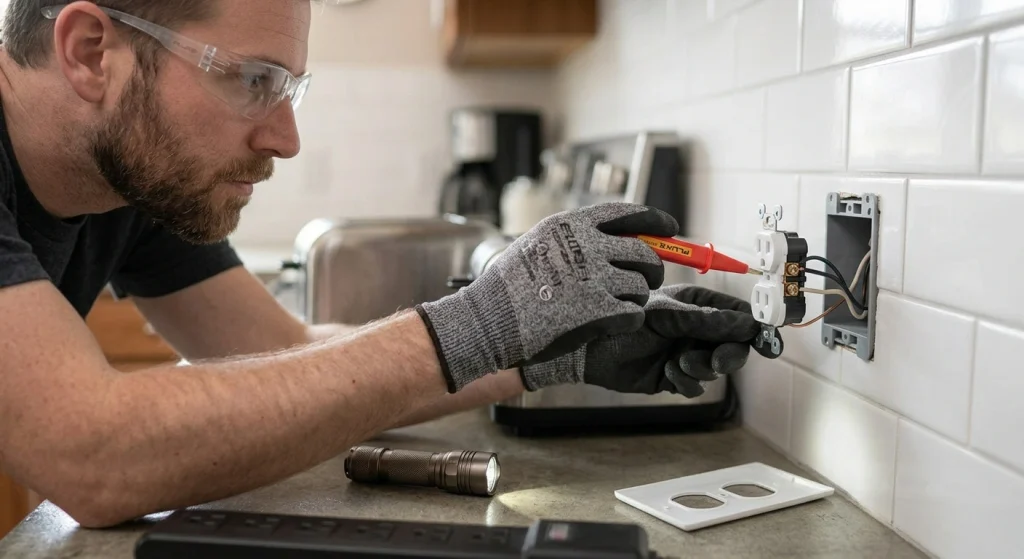
- Turn off the breaker. Find the breaker for that circuit and switch it off. If you can’t tell which one, turn off the main breaker if you can do so safely.
- Check for damage. Look for scorch marks, melting, or discoloration, without touching.
- Check what was plugged in. A space heater or power strip is a common cause.
- Don’t turn it back on. Leave the circuit off until an electrician checks it.
- Call a licensed electrician. Describe what you saw and how long it was hot.
If you smell smoke, see sparks, or the outlet is melting, leave the building and call 911.
What NOT to Do
- Don’t keep using the outlet because it still works.
- Don’t touch scorched or melted parts. They may still be live.
- Don’t use a power strip or extension cord to avoid the outlet.
- Don’t replace it with the power on. That is how people get shocked.
- Don’t just swap the outlet and move on without finding why it overheated.
What a Licensed Electrician Does
A professional looks for the cause, not just the symptom. A good visit usually includes:
- Turning off power and confirming the circuit is dead
- Checking the outlet, wire connections, and box for heat damage
- Testing for loose connections and overloaded circuits
- Moving back-stabbed wires to screw terminals, or replacing the outlet
- Checking the breaker and the rest of the circuit
- Recommending a new circuit if the load is too high
- Explaining the cause and giving a written price
If the problem is a dead or failing outlet, our guide to an electrical outlet not working explains the common causes. If it’s tied to a breaker that keeps shutting off, read about when a breaker keeps tripping. For a bigger safety picture, an electrical safety inspection checks the whole home.
How Much Does It Cost to Fix a Hot Outlet?
Costs depend on the cause. As a rough U.S. guide, which is a planning estimate and not a quote:
| Repair | Typical cost |
|---|---|
| Service call or diagnosis | $100 – $250 |
| Replace a standard outlet | $100 – $250 |
| Replace a GFCI outlet | $100 – $300 |
| Replace a breaker | $150 – $400 |
| Add a dedicated circuit | Quote required |
| Repair damaged wiring in a wall | Quote required (varies widely) |
| Aluminum wiring repair | Quote required (varies widely) |
Always ask for a written quote that lists the work, the parts, and any permit.
Ready for a Written Quote? Tap the Call Button
You don’t have to guess at the price. Tap the call button below, describe the outlet, and ask the electrician for a written quote. There’s no pressure, and you decide whether to go ahead.
How to Know You Can Trust the Electrician
We are a referral service. We connect homeowners with independent electricians, and we don’t do the electrical work ourselves. Here is how to protect yourself, whoever you hire:
- Ask for the license number. Verify it with the Alabama Electrical Contractors Board.
- Ask for proof of insurance. Liability coverage protects your home.
- Get the price in writing. It should list the work, parts, and any permit.
- Ask what caused the heat. A good electrician explains it plainly.
- Ask about a warranty. Know what covers the parts and what covers the labor.
If someone offers to just swap the outlet without checking the connections, or refuses to show a license, walk away.
Can You Fix a Hot Outlet Yourself?
The safe part is stopping use, unplugging devices, and turning off the breaker. Replacing the outlet is different. It means working with wires that may be damaged, and the heat may point to a larger issue.
- A hot outlet can have heat damage inside the box that you can’t see
- The cause may be elsewhere on the circuit
- Aluminum wiring needs special parts and methods
- Mistakes can leave a hidden fire risk
If you’re not trained, leave it to a licensed electrician.
How to Prevent Hot Outlets
- Don’t plug high-power devices, like space heaters, into power strips
- Use one high-power device per outlet
- Replace outlets that are loose, cracked, or discolored
- Replace damaged plugs and cords
- Have older homes and aluminum wiring inspected
- Don’t ignore a warm outlet, even a mild one
- Have a periodic electrical inspection
For more on how referrals work, see our home electrician service page. If you’re in North Alabama, our page on finding a local electrician in Huntsville can help.
How It Works
- Click the call button. Tell us your location and what’s happening.
- Get matched. We connect you with an independent, licensed electrician in your area, where coverage is available.
- Get a written quote. The electrician reviews the problem and quotes the price directly.
- Decide. You choose whether to hire them. No obligation.
Frequently Asked Questions
Why is my outlet hot to touch?
The most common causes are a loose wire connection, an overloaded outlet or circuit, a worn outlet, a damaged plug or cord, or a faulty appliance. If it is hot with nothing plugged in, the cause is likely a wiring-side fault. Stop using it and call a licensed electrician.
Is it normal for an outlet to feel warm?
A slight warmth when a high-power device is running can be normal. An outlet that is hot, warm with nothing plugged in, discolored, or smells burnt is not normal and should be inspected.
Can a hot outlet cause a fire?
Yes. Heat from a loose connection or overload can damage the outlet and surrounding materials. That is why a hot outlet should be taken seriously.
What should I do if an outlet is hot?
Stop using it, unplug devices carefully, and turn off the breaker for that circuit. Do not turn it back on until a licensed electrician has checked it. If you see smoke or sparks, leave the building and call 911.
Can I replace a hot outlet myself?
It is not recommended. The heat can point to a larger problem, and working near damaged wiring is risky. Call a licensed electrician.
Don’t Ignore an Outlet Hot to Touch
A slightly warm plug on a space heater may be harmless. But an outlet hot to touch, especially with nothing plugged in, is a sign something isn’t right behind the wall.
Whether it’s a loose connection, an overloaded circuit, or a wiring fault, a licensed electrician can find the cause, fix it safely, and give you a clear price. Click the Call Now button below to get started today.