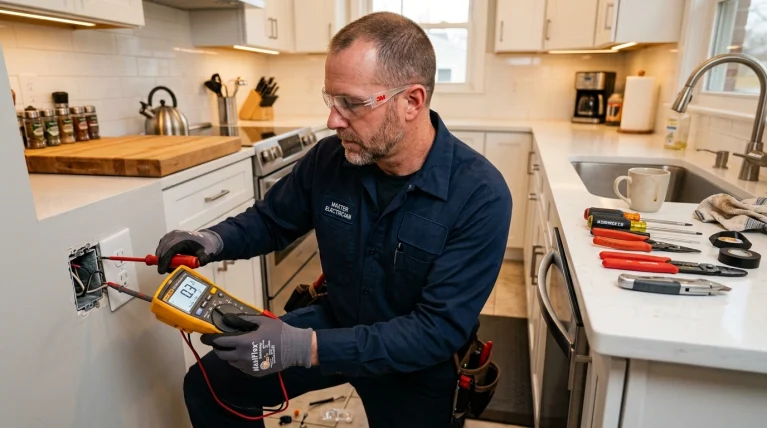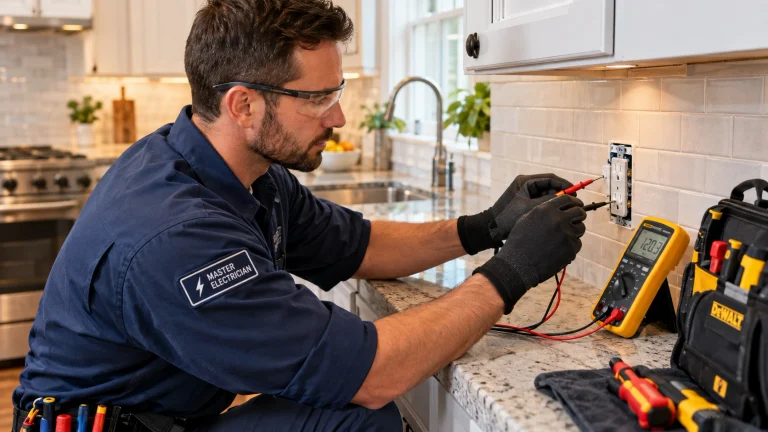
Outlet Stopped Working Breaker Not Tripped? Safe Fixes
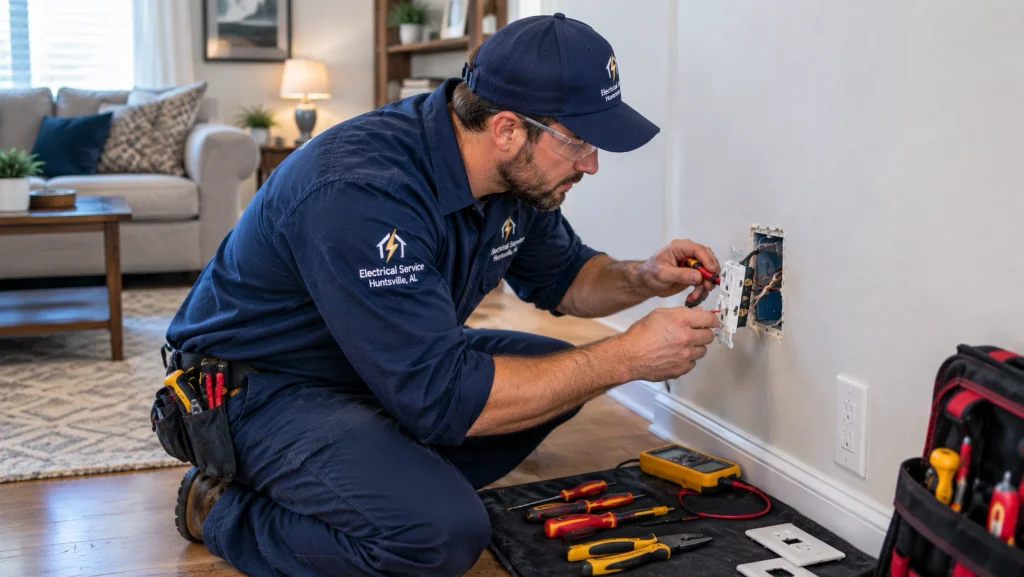
Outlet Stopped Working Breaker Not Tripped: Troubleshooting & Professional Repairs
You flip a light switch or plug in a kitchen appliance, only to find zero power. You walk over to your electrical panel, expecting to see an open switch, but every single circuit breaker is firmly in the “ON” position. Dealing with an outlet stopped working breaker not tripped scenario is one of the most confusing electrical problems a homeowner can encounter. It leaves you wondering where the current was interrupted and whether your home is secretly at risk for hidden wiring damage.
When your main service panel appears completely normal, the failure point is almost always hidden within the branch circuit itself. Tripped upstream GFCI receptacles, loose terminal screws, worn internal contact strips, or failed backstabbed wiring connections behind the wall plate can all cut power to an outlet while leaving your panel breaker untouched. Leaving these issues unresolved can quickly lead to high-resistance overheating, dangerous arcing, and severe fire risks.
Don’t let hidden wiring defects jeopardize your family’s safety or waste hours on risky DIY guesswork. Click the button below to call our licensed master electricians right now for fast, reliable, and safe diagnostic repairs!
🚨 DEALING WITH A DEAD OUTLET AND NORMAL BREAKERS?
A dead socket with an untripped breaker often signals loose wiring or hidden thermal arcing inside your walls. Our local master electricians are standing by to inspect and fix your power issues fast.
Why Is Your Outlet Stopped Working Breaker Not Tripped?
When an electrical circuit loses continuity, current stops flowing. Breakers are engineered to trip only when they sense a sudden current overload or a direct high-amp short circuit. If your outlet stopped working breaker not tripped, the underlying breakdown is usually a physical break or high-resistance fault that doesn’t draw enough excess amperage to activate the panel’s safety mechanism.
Here are the primary causes our master electricians find when troubleshooting dead wall sockets with untripped panel breakers:
- Tripped Upstream GFCI Receptacle: Ground Fault Circuit Interrupters (GFCIs) are wired in series to protect multiple standard outlets downstream. If a GFCI in your bathroom, kitchen, or garage trips due to a minor ground fault, every outlet downstream will lose power instantly without tripping the main panel breaker.
- Loose Terminal Screws Behind the Wall Plate: Physical vibration and repeated plug insertions can cause connection screws on the side of the outlet housing to back out, breaking the live hot or neutral wire connection.
- Failed “Backstabbed” Push-In Connections: Many builders insert bare copper conductors into quick-connect push slots on the back of builder-grade receptacles. Over time, internal tension springs weaken, resulting in a loose connection and complete power loss.
- Burned or Melted Receptacle Contacts: High electrical resistance generates extreme thermal buildup. Over time, internal metal wipers can melt, severing the path of electricity while keeping the breaker undisturbed.
- Open Neutral Wire Failure: A break in the white neutral conductor cuts the return path for electrical current. The circuit remains energized and high-voltage, but appliances will fail to power on.
- Half-Hot Switched Outlet Configuration: In living rooms and bedrooms, half of a duplex receptacle may be wired to a wall switch. If a wall switch was bumped or turned off, power to that specific plug will cut out completely.
Diagnostic Matrix: Dead Outlet vs. Panel Breaker Status
Use this diagnostic chart to evaluate the symptoms in your home and determine the best response:
| Observed Symptom | Primary Underlying Cause | Hazard Level | Recommended Action |
|---|---|---|---|
| Outlet stopped working breaker not tripped (single socket) | Loose terminal screw, failed backstab, or worn contact | Moderate | Request an electrician to replace the receptacle and check connections. |
| Multiple dead outlets in room (breaker normal) | Tripped GFCI outlet upstream on the same branch loop | Low to Moderate | Inspect nearby kitchens/baths and press “RESET” on all GFCI receptacles. |
| Dead outlet warm to touch or discolored | High-resistance electrical arcing / thermal melting | CRITICAL | Turn off circuit breaker manually; call an emergency electrician immediately. |
| Buzzing or clicking sound from dead socket | Active sparking behind wall plate | CRITICAL | Discontinue circuit use immediately and seek professional diagnostic service. |
| Plugs feel loose or slide out easily | Worn internal metal wipers / loss of spring tension | Moderate-High | Replace worn receptacle to prevent thermal arcing and power failure. |
If you smell burning plastic or feel heat coming from a non-functioning socket, do not ignore it. Click below to speak directly with an expert electrician today!
⚡ PROTECT YOUR PROPERTY FROM HIDDEN WIRING FIRES
High-resistance loose connections generate intense heat without ever tripping your circuit breaker.
Safe Step-by-Step Troubleshooting Guide
Before calling our dispatch staff, perform these safe, non-invasive checks to pinpoint the source of your dead wall socket.
Step 1: Confirm the Pluggable Appliance Works
Unplug your appliance or electronics and test them in a known working outlet in a different room. This simple step rules out a frayed power cord, blown internal fuse, or broken appliance motor.
Step 2: Check and Reset Every Household GFCI Outlet
Inspect all GFCI outlets in surrounding areas, including kitchens, bathrooms, laundry rooms, garages, basements, and outdoor patios. Press the TEST button firmly on each unit, followed by the RESET button. Because standard outlets are frequently daisy-chained downstream from GFCI protection, resetting a tripped button in another room often restores immediate power to an outlet stopped working breaker not tripped.
Step 3: Check Room Wall Light Switches
Walk through the room and flip all wall switches to the “ON” position. Many residential living areas feature “half-hot” outlets where a wall switch controls top or bottom socket power for floor lamps.
Step 4: Properly Test the Circuit Breaker
Go to your electrical panel and locate the breaker for the dead room. Sometimes a breaker trips internally without the handle visibly moving to the “OFF” position. Push the breaker lever firmly to the full OFF position until it clicks, then flip it back to ON.
The Hidden Dangers of Leaving Dead Outlets Unaddressed
It is easy to overlook a non-functioning outlet and run an extension cord from another wall socket. However, when an outlet stopped working breaker not tripped, leaving the problem unaddressed poses serious long-term risks to your property:
- Hidden Electrical Fire Hazards: Loose wire terminals or failing backstab connectors spark continuously as electricity arches across tiny gaps. This arcing can exceed temperatures of 10,000°F, igniting surrounding wood studs and drywall insulation.
- Overloading Secondary Circuits: Relying heavily on extension cords and multi-plug adapters to bypass a dead socket strains neighboring circuits, causing unexpected power drops and potential breaker trips.
- Electrocution & Shock Risks: An open neutral or loose ground wire can keep metal faceplate screws or connected metal appliances energized with high voltage, posing severe shock risks to your family.
- Cascading Circuit Outlets: Because residential outlets are linked together in a continuous chain, one failing terminal connection will eventually cut off power to all downstream receptacles in adjacent rooms.
DIY Repair Dangers vs. Professional Electrician Safety
While checking wall switches or pushing a GFCI reset button is safe for any homeowner, opening junction boxes and handling live high-voltage conductors presents significant dangers. Working with licensed master electricians guarantees full safety and complete code compliance:
| Uncertified DIY Repair Hazards | Professional Electrician Service Benefits |
|---|---|
| ❌ High risk of severe shock, arc flash, and electrocution | ✅ Master-level safety standards, diagnostic tools, and craftsmanship |
| ❌ Loose terminal screw connections leading to hidden fires | ✅ Thorough voltage, ground fault, and neutral continuity testing |
| ❌ Incorrect wire sizing or reversed hot/neutral polarity | ✅ Complete adherence to National Electrical Code (NEC) guidelines |
| ❌ Voiding home insurance policies due to uncertified work | ✅ Transparent flat-rate pricing and comprehensive labor warranties |
Leave complex internal wiring diagnostics to fully equipped experts. Click below to get connected with our local dispatch staff right away!
Our Simple 4-Step Outlet Repair Process
When you contact our residential electrical team to resolve an outlet stopped working breaker not tripped, we ensure a fast, transparent, and hassle-free experience:
- Fast Scheduling: Click our phone link to connect with our local office team. We book a convenient service window that fits your schedule.
- Comprehensive Diagnostics: Our certified electrician arrives on time, uses personal protective equipment, and conducts digital multimeter testing across your receptacle box and panel.
- Upfront Flat-Rate Pricing: We explain the exact cause of your outlet failure and provide a clear, written flat-rate quote before any repair work begins.
- Expert Repair & Safety Inspection: We replace worn receptacles, secure all terminal screws, fit modern wall plates, and test circuit load integrity before leaving.
Frequently Asked Questions
Why is my outlet stopped working breaker not tripped?
The most common causes are a tripped GFCI outlet located upstream in another room, a loose wire connection behind the outlet plate, a failed backstabbed wire slot, or internal contact wear inside the receptacle housing itself.
Is a dead outlet a fire hazard if the breaker hasn’t tripped?
Yes. If the outlet stopped functioning due to loose terminal connections or thermal arcing, dangerous heat generation can continue behind the drywall without drawing enough amperage to trip the circuit breaker.
How much does it cost to fix an outlet that stopped working?
Replacing standard wall outlets or resetting damaged branch connections is a fast and affordable service. We conduct an initial diagnostic evaluation and present a clear, flat-rate quote before starting any work.
How can I tell if a dead outlet is wired to a GFCI?
GFCIs are equipped with “TEST” and “RESET” buttons on the faceplate. Builders routinely connect standard outlets in bedrooms or hallways to a GFCI installed in a nearby bathroom, kitchen, or garage for added shock protection.
Can I replace a broken outlet myself?
Replacing an electrical receptacle requires shutting off main power, verifying zero voltage with a calibrated meter, and making tight, code-compliant wire connections. To ensure total safety and avoid fire risks, we always recommend hiring a licensed electrician.
Restore Power to Your Home Safely—Call Us Today!
If you are dealing with an outlet stopped working breaker not tripped, don’t leave your electrical safety to chance. Our team of certified, background-checked master electricians is ready to diagnose your wiring issues, replace broken receptacles, and ensure your entire electrical distribution system operates safely.
We pride ourselves on rapid response times, clean workmanship, and upfront pricing on every single job.
Don’t wait for a hidden wiring defect to turn into an expensive electrical emergency. Click the button below to call our friendly office staff and schedule your outlet repair today!
📞 READY TO FIX YOUR DEAD WALL SOCKETS?
Our licensed electricians are standing by to restore safe, reliable power to your home!