Electrical Safety Inspection: Cost, What’s Checked & When You Need One
Electrical Safety Inspection: What It Covers, What It Costs, and When You Need One
Updated October 2026
An electrical safety inspection is a professional check of your home’s wiring, panel, outlets, and grounding to find hazards before they cause a fire, shock, or outage. It’s most useful if your home is older, you’re buying or selling, you’ve noticed warning signs, or you’ve never had the system checked. Call us, and we’ll connect you with an independent, licensed electrician who can inspect your home and give you a written report.
Free to call. Electricians are independent, licensed professionals who give their own quotes.
Smoke, sparks, or a burning smell right now? Leave the area and call 911 first. An inspection is for preventing problems, not for active emergencies.
Key Takeaways
- An electrical safety inspection checks the panel, wiring, outlets, grounding, and protection devices like GFCI and AFCI.
- A basic inspection often costs about $100 to $350 in the U.S., depending on home size and how deep the testing goes.
- Many electricians suggest one every few years for typical homes, and more often for older homes or after major changes.
- You get a written report. You then decide which repairs to make, and in what order.
Why Get an Electrical Safety Inspection?
The National Fire Protection Association (NFPA) lists electrical failures and malfunctions among the leading causes of home structure fires. Many of those problems build up slowly: connections loosen, wire insulation ages, and panels get overloaded by modern appliances. They’re usually invisible until something fails.
- Fire prevention: Finds overheating connections, damaged wiring, and overloaded circuits.
- Shock protection: Confirms grounding and GFCI protection work where water is present.
- Buying or selling: Reveals costly repairs before closing, or documents a clean system for buyers.
- Insurance: Some insurers ask for an electrical evaluation on older homes. Ask your insurer what they accept.
- Planning upgrades: Shows whether your panel can support an EV charger, a new A/C, or a generator.
What Does an Electrical Safety Inspection Cover?
Scope varies by electrician, so ask what’s included before you book. A thorough electrical safety inspection normally covers the following.
Main Panel and Service Entrance
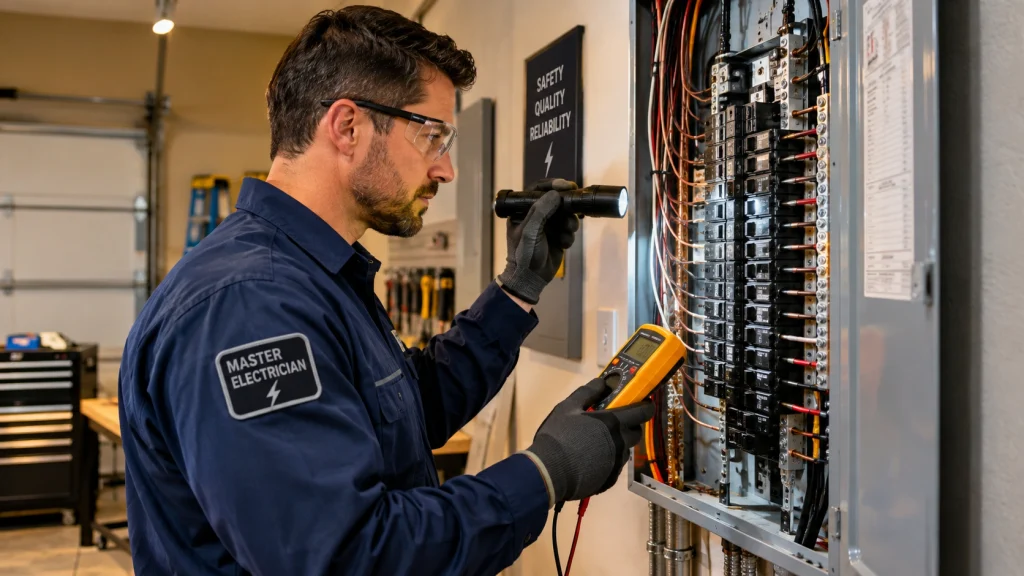
The electrician checks the panel for rust, scorch marks, loose or double-tapped breakers, correct breaker sizes, labeling, and the condition of the service entrance and grounding connections. They also note the panel brand and age, since some older brands, such as Federal Pacific and Zinsco, have known problems.
Outlets, Switches, and Protection Devices
Sampling or testing receptacles for correct wiring, grounding, and secure connections, and testing GFCI and AFCI devices to confirm they trip. Kitchens, bathrooms, garages, and outdoor outlets get extra attention.
Visible Wiring and Junction Boxes
In accessible areas like the attic, basement, and crawlspace, the electrician looks for damaged cable, uncovered junction boxes, improper splices, and legacy wiring such as cloth-covered, aluminum branch, or knob-and-tube wiring. Wiring inside closed walls can’t be fully seen without opening them.
Large Appliances and Dedicated Circuits
Checks that the A/C, water heater, dryer, range, and any EV charger have properly sized circuits and breakers.
Grounding, Bonding, and Surge Protection
Confirms the grounding system and bonding are in place, and notes whether you have whole-home surge protection.
Electrical Safety Inspection Cost
Prices vary by location, home size, and how detailed the inspection is. These are typical U.S. ranges for planning, not quotes. Your electrician will give you the real price first.
| Type of inspection | Typical cost | Typical time |
|---|---|---|
| Basic safety inspection (panel, sample outlets, visible wiring) | $100 – $250 | About 1 – 2 hours |
| Whole-home inspection with full outlet testing and a written report | $200 – $350 | About 2 – 3 hours |
| Advanced diagnostics (for example, tracing a specific problem or thermal imaging, if offered) | $150 – $350+ | Varies |
Estimates only. Large homes, older systems, and hard-to-reach areas can cost more. Repairs found during the inspection are quoted separately.
How Often Should You Schedule an Electrical Safety Inspection?
There’s no single rule for every home. This is a common rule of thumb, and local codes or your insurer may differ.
| Your situation | Suggested timing |
|---|---|
| Newer home, no problems | Every 5 – 10 years, or when you add major loads |
| Home 20 – 40 years old | Every 3 – 5 years |
| Home 40+ years old, or has an older panel or legacy wiring | Every 1 – 3 years, and before you add load |
| Buying a home | Before closing |
| After a major remodel, flood, fire, or power surge | Right away |
| Warning signs present | As soon as you can |
Warning Signs You Need an Electrical Safety Inspection
| Sign | Possible cause | What to do |
|---|---|---|
| Breakers that keep tripping | Overload, short, or failing breaker | Book an inspection |
| Flickering or dimming lights | Loose connection or overloaded circuit | Book an inspection |
| Warm or discolored outlets | Loose, high-resistance connection | Stop using it and call right away |
| Burning smell or scorch marks | Overheated or arcing wires | Leave the area, call 911 for smoke, then call an electrician |
| Buzzing or crackling | Arcing at a loose connection | Turn off the circuit and call |
| Two-prong outlets or a fuse box | Older, ungrounded wiring | Book an inspection |
Buying a Home? Get an Electrical Safety Inspection First
A general home inspector gives a broad overview of the house, but electrical defects can be missed in a quick look. A separate electrical safety inspection before closing can uncover panel problems, unsafe wiring, or missing protection devices while you still have time to negotiate repairs or credits. Ask your agent about your inspection window, since it’s often short.
How to Prepare for the Inspection
- Clear access to your electrical panel, attic hatch, and crawlspace.
- Write down problems you’ve noticed, such as which breaker trips and which outlets feel warm.
- Expect a short power interruption to test the main breaker. Save your work and shut down sensitive electronics.
- Have a list of planned changes, like an EV charger, a hot tub, or a remodel, so the electrician can check capacity.
- Ask what the written report will include.
What You Can Safely Check Yourself
A homeowner’s walkthrough isn’t a replacement for an electrical safety inspection, but it can help you spot problems between visits. Never open your electrical panel or touch wiring.
- Press the TEST and RESET buttons on GFCI outlets monthly.
- Look for cracked, discolored, or loose outlet and switch plates.
- Check cords for fraying, and avoid running them under rugs or overloading power strips.
- Note any burning smell, buzzing, or warm spots, and call a professional if you find one.
- Test smoke and carbon monoxide alarms.
After the Inspection: Deciding What to Fix First
A good report ranks findings so you can plan. Ask the electrician to group them like this.
| Priority | Examples | Timing |
|---|---|---|
| Urgent (safety hazard) | Scorched panel, overheating connections, exposed live wiring, missing GFCI where water is present | Fix immediately |
| Soon | Recalled panel brand, double-tapped breakers, ungrounded outlets, no surge protection | Within weeks or months |
| Plan ahead | Aging panel, legacy wiring, capacity for future loads | Budget for the next 1 – 5 years |
You aren’t required to hire the inspecting electrician for repairs. You can get other quotes.
Electrician vs. Home Inspector vs. Code Inspector
| Licensed electrician | General home inspector | City or county code inspector | |
|---|---|---|---|
| Focus | Electrical system in depth | Whole house, broad overview | Permitted work meets code |
| Can open and test the panel | Yes | Often limited | For permitted work |
| Can repair problems | Yes | No | No |
| Best for | Safety checks, older homes, pre-purchase | General condition before buying | Final sign-off on permits |
How to Choose an Electrician for an Electrical Safety Inspection
- Ask for the license number and verify it with your state’s electrical licensing board.
- Ask about insurance and request proof.
- Ask exactly what’s included: panel, every outlet or a sample, attic and crawlspace, and whether a written report is provided.
- Ask about the price, and whether the fee is credited if you hire them for repairs.
- Check recent reviews and ask how soon you can get the report.
How It Works
- Call us and tell us your location, your home’s age, and any concerns.
- Get matched with an independent licensed electrician who serves your area.
- Schedule and confirm the price and what the inspection includes.
- Get your report and decide on repairs. You hire the electrician directly.
For other home electrical work, see our home electrician service page. In North Alabama, see our guide to a local electrician in Huntsville.
Frequently Asked Questions
What is an electrical safety inspection?
It’s a professional check of your home’s electrical system, including the panel, wiring, outlets, grounding, and protection devices, to find hazards and code problems before they cause harm.
How much does an electrical safety inspection cost?
A basic inspection often costs about $100 to $250. A whole-home inspection with a written report is more often $200 to $350. Advanced diagnostics can cost more.
How long does it take?
A typical single-family home takes about one to three hours, depending on size, access, and how complex the panel is.
How often should I get an electrical safety inspection?
Many electricians suggest every few years for typical homes, more often for homes over 40 years old, and always before buying a home or after major electrical changes.
Will the power be shut off?
Briefly, yes. The electrician may need to turn off the main breaker to test and inspect the panel. Ask them to coordinate the timing with you.
Is this the same as a home inspection?
No. A home inspector gives a broad overview of the whole house. An electrician focuses on the electrical system in depth and can fix problems.
What happens if the inspection finds problems?
You get a written list of findings. Ask the electrician to rank them by urgency and quote the repairs. You can then decide what to fix, and you can get other quotes.
Are the electricians licensed and insured?
We refer you to independent electricians who are licensed to work in their state. Ask for their license number and proof of insurance, and verify the license with your state board.
Ready to Book an Electrical Safety Inspection?
One call gets you matched with a licensed electrician. Have your location, your home’s age, and any warning signs ready, and we’ll take it from there.
7 Comments
Comments are closed.