Lights Flickering? Causes, Safe Fixes & Cost | Home Electrician Service
Lights Flickering? 10 Causes, Safe Checks, and When to Call an Electrician
Updated October 2026
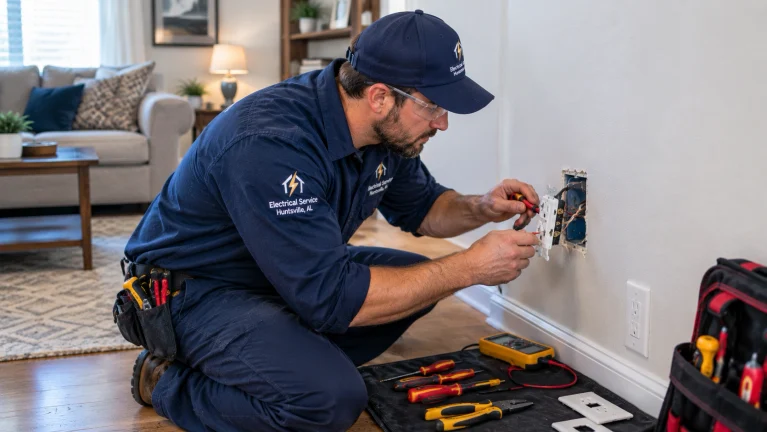
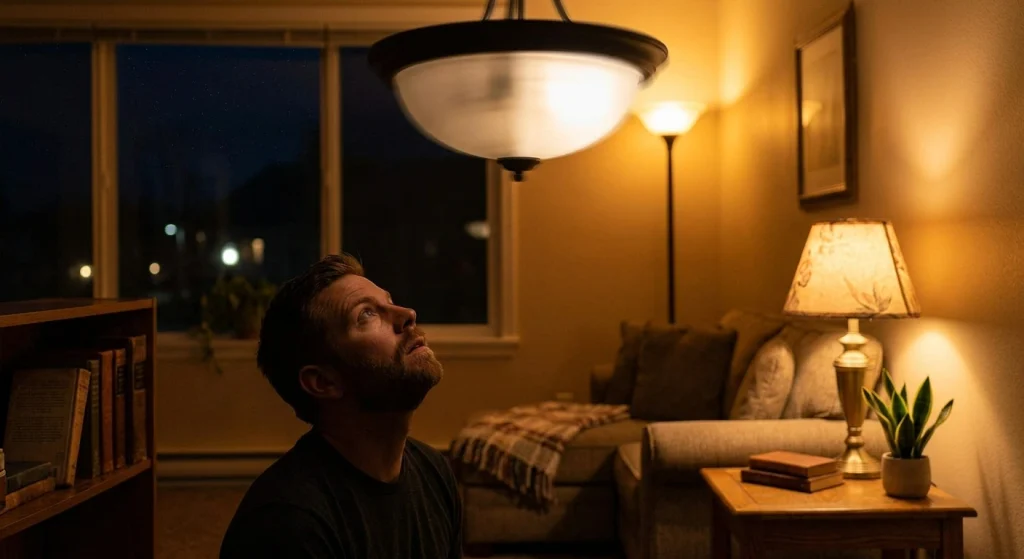
Seeing lights flickering at home is annoying, and it can be a warning. Sometimes the cause is a loose bulb that takes ten seconds to fix. Other times it points to a loose connection, an overloaded circuit, or a panel problem that can overheat.
Click the Call Now button below and we’ll connect you with an independent, licensed electrician in your area. Or keep reading to find the likely cause, the safe checks you can try first, and the signs that mean you should stop and call.
Free to call. Electricians are independent, licensed professionals who give their own quotes. Coverage varies by area, so tell us your location.
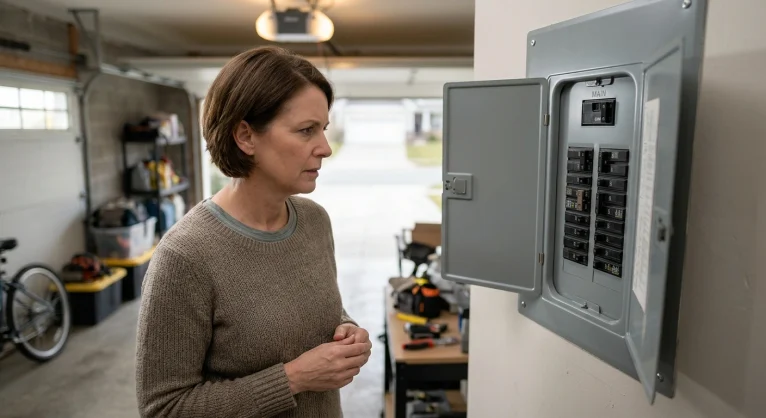
Stop and read this first. If lights flickering comes with a burning smell, buzzing or crackling, a warm switch or outlet, scorch marks, or sparks, turn off the circuit at the panel if you can reach it safely and keep everyone away. Don’t open the panel cover. If there is smoke or fire, leave the building and call 911 first.
Is Flickering Lights Dangerous?
It depends on the pattern. A single bulb that flickers is rarely dangerous. Lights flickering across several rooms, or flickering with heat, noise, or a smell, can point to a wiring or panel problem that deserves a professional look.
Here are the concerns we hear most from homeowners:
- “Is this a fire risk?” Usually not, but some causes are, and you can’t tell by looking.
- “It happens when the AC starts.” A short dip can be normal, but a big one means the system is strained.
- “Only one room flickers.” That helps narrow it down to a bulb, switch, fixture, or circuit.
- “I changed the bulb and it still flickers.” Then the cause is further back.
- “I don’t know who to trust.” It’s hard to tell a good electrician from a pushy one.
This guide covers all five. You’ll learn what each pattern usually means, what’s safe to check, and when to call.
Why Are My Lights Flickering? 10 Common Causes
Lights flicker for a handful of reasons. These are the most common, from the simplest to the most serious.
1. A Loose or Failing Bulb
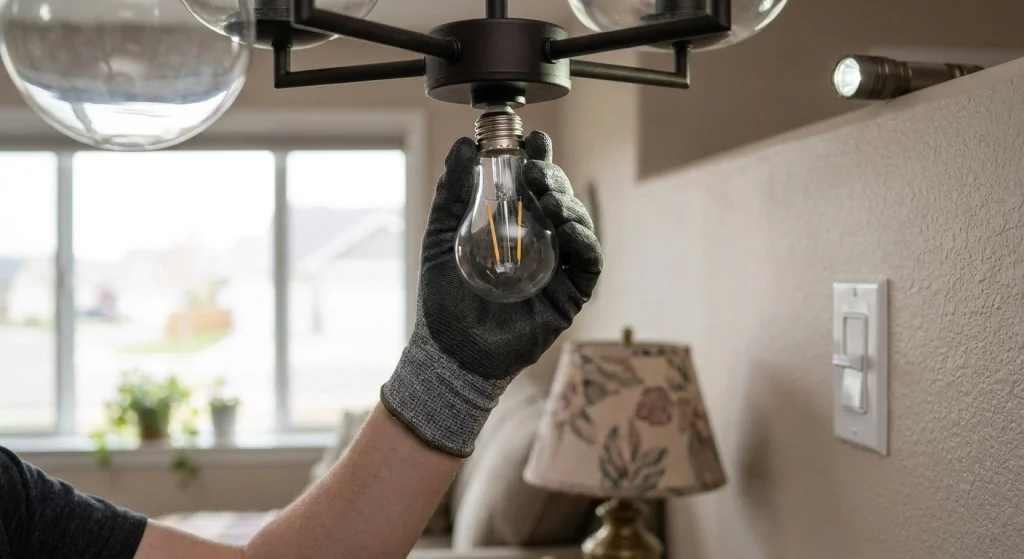
A bulb that isn’t screwed in fully, or one that is near the end of its life, is the most common cause. Switch the light off, let the bulb cool, and tighten it. If that doesn’t help, try a new bulb.
2. An Incompatible LED Bulb and Dimmer
Many LED bulbs flicker or buzz on dimmers made for old incandescent bulbs. Look for bulbs marked dimmable and a dimmer rated for LEDs. A mismatch is a very common reason for lights flickering on a dimmer.
3. A Worn Switch or Dimmer
Switches wear out. If the light flickers when you touch or move the switch, the contacts inside may be failing. A switch that feels warm or loose should be replaced by an electrician.
4. A Loose Fixture or Socket
A bad connection at the light socket or fixture can make one light flicker. If the issue is in one fixture only, the fixture or its wiring is a likely cause.
5. Large Appliances Starting Up
When an air conditioner, refrigerator, dryer, or well pump starts, it draws a surge of power. A brief dim in the lights is common. A big dip, or one that gets worse over time, suggests the circuit or panel is strained.
6. An Overloaded Circuit
Too many devices on one circuit can cause lights to dim or flicker, and may trip the breaker. Space heaters, hair dryers, and microwaves are frequent culprits. See why a breaker keeps tripping for more on overloads.
7. Loose Wiring or a Bad Connection
A loose wire at a switch, outlet, junction box, or in the panel creates resistance and heat. It can make lights flicker, and it is a fire risk. This is one of the more serious causes.
8. A Loose Neutral Connection
A loose or damaged neutral wire can make lights flicker, get very bright, or dim unevenly, and can damage electronics. If lights surge bright and dim in several rooms, call an electrician promptly.
9. A Failing Breaker or Panel Problem
A worn breaker or an aging panel can cause flickering, buzzing, or trips. Learn more in our guide to electrical panel upgrades in Huntsville.
10. A Utility or Service Problem
Sometimes the problem is outside your home: the power lines, a transformer, or the service connection. If neighbors have flickering lights too, or it happens during storms, call your power company.
What the Pattern Usually Means
When and where lights flickering happens is the biggest clue. Use this table:
| What happens | Often means | What to do |
|---|---|---|
| One bulb flickers | A loose or failing bulb | Tighten or replace the bulb |
| One light flickers on a dimmer | LED and dimmer mismatch | Use dimmable bulbs and an LED-rated dimmer |
| One room flickers | A switch, fixture, or circuit issue | Try a new bulb, and call if it persists |
| Lights dim when the AC or a big appliance starts | A voltage dip or strained circuit | Call an electrician if it is large or getting worse |
| Lights flicker in several rooms | A loose connection or panel issue | Call an electrician promptly |
| Lights flicker during storms or wind | A utility or service issue | Call your power company, and check with neighbors |
| Flickering with buzzing, heat, or a burning smell | Overheating or arcing | Turn off the circuit and call right away |
Lights Still Flickering? Click the Call Button
Flicker is easy to guess at and hard to diagnose safely. Click the call button below, tell us what’s happening, and we’ll connect you with an independent, licensed electrician who can find the cause.
Safe Checks to Try First
These steps are safe for most homeowners. Don’t open the panel, a switch, or a fixture.
- Note the pattern. Which lights? When does it happen? Does it follow an appliance?
- Check the bulb. With the light off and cool, tighten it. Try a new bulb of the same type.
- Check dimmer compatibility. Make sure LED bulbs are marked dimmable and the dimmer works with LEDs.
- Try the same bulb in another lamp. If it still flickers, the bulb is the problem.
- Check other rooms. Flicker in several places points to the circuit or panel.
- Unplug heavy loads. See whether flicker stops when a heater or appliance is off.
- Ask neighbors. If they have flickering too, it may be the utility.
- Stop if you notice heat, noise, or smell. Turn off the circuit and call.
If you only get flicker with one bulb or one dimmer, the fix may be simple. If it keeps happening, there is more to find.
What NOT to Do
- Don’t ignore flicker that comes with heat, buzzing, or a burning smell.
- Don’t open the panel or a switch box yourself.
- Don’t use a higher-watt bulb than the fixture is rated for.
- Don’t keep resetting a breaker that trips with the flicker.
- Don’t use power strips as a long-term fix for an overloaded circuit.
What a Licensed Electrician Does
A professional looks for the cause, not just the flicker. A good visit usually includes:
- Asking when and where the flicker happens
- Checking bulbs, switches, dimmers, and fixtures
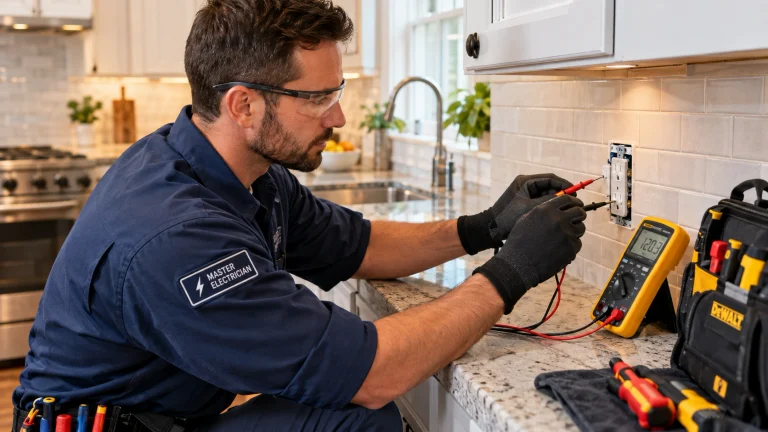
- Testing voltage and the load on the circuit
- Inspecting connections at outlets, switches, and the panel
- Looking for a loose neutral or heat damage
- Replacing worn switches, dimmers, or breakers
- Recommending a new circuit or a panel upgrade if needed
- Explaining the cause and giving a written price
For a whole-home check, an electrical safety inspection can find loose connections before they become a problem. If flicker comes with a warm outlet, read about an outlet hot to touch. If you’re upgrading bulbs or dimmers, our page on a smart lighting installer may help.
How Much Does It Cost to Fix Flickering Lights?
Costs depend on the cause. As a rough U.S. guide, which is a planning estimate and not a quote:
| Repair | Typical cost |
|---|---|
| Change a bulb yourself | A few dollars |
| Service call or diagnosis | $100 – $250 |
| Replace a switch or dimmer | About $100 – $250 |
| Replace a light fixture (labor) | About $100 – $300 |
| Replace a breaker | $150 – $400 |
| Fix a loose wire or connection | Quote required (varies widely) |
| 200-amp panel upgrade | $1,800 – $4,500 |
Always ask for a written quote that lists the work, the parts, and any permit.
Ready for a Written Quote? Tap the Call Button
You don’t have to guess at the price. Tap the call button below, describe what’s happening, and ask the electrician for a written quote. There’s no pressure, and you decide whether to go ahead.
How to Know You Can Trust the Electrician
We are a referral service. We connect homeowners with independent electricians, and we don’t do the electrical work ourselves. Here is how to protect yourself, whoever you hire:
- Ask for the license number. Verify it with the Alabama Electrical Contractors Board.
- Ask for proof of insurance. Liability coverage protects your home.
- Get the price in writing. It should list the work, parts, and any permit.
- Ask what caused the flicker. A good electrician explains it plainly.
- Ask about a warranty. Know what covers the parts and what covers the labor.
If someone offers to just swap bulbs and leave without testing the circuit, or refuses to show a license, walk away.
Can You Fix Flickering Lights Yourself?
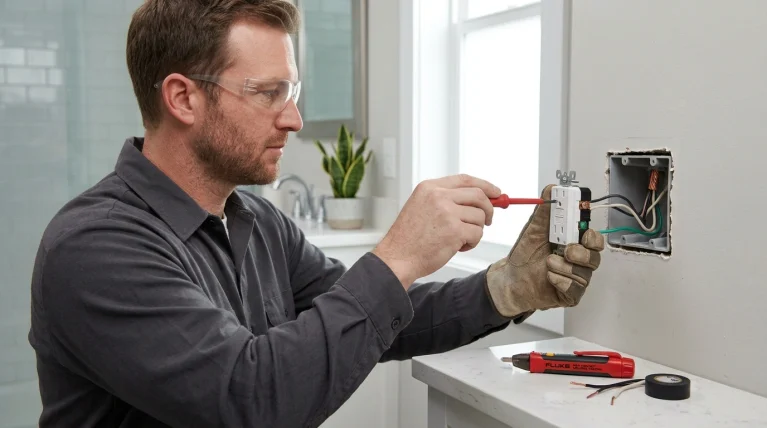
You can safely change bulbs, match LED bulbs to dimmers, and unplug heavy loads. Anything that involves opening a switch, a fixture, or the panel is a job for a licensed electrician.
- Loose wires can be hidden inside walls and boxes
- A loose neutral can damage electronics
- Panel work is where most serious electrical injuries happen
- Mistakes can leave a hidden fire risk
If you’re not trained, leave it to a professional.
How to Prevent Flicker
- Use bulbs that match your fixtures and dimmers
- Replace old or noisy dimmers and switches
- Don’t overload circuits with high-power devices
- Have older homes and panels inspected
- Replace loose or damaged fixtures
- Consider a surge protector for sensitive electronics
- Don’t ignore flicker that is getting worse
For more on how referrals work, see our home electrician service page. If you’re in North Alabama, our page on finding a local electrician in Huntsville can help.
How It Works
- Click the call button. Tell us your location and what’s happening.
- Get matched. We connect you with an independent, licensed electrician in your area, where coverage is available.
- Get a written quote. The electrician reviews the problem and quotes the price directly.
- Decide. You choose whether to hire them. No obligation.
Frequently Asked Questions
Why are my lights flickering?
Common causes are a loose or failing bulb, an LED and dimmer mismatch, a worn switch, a loose fixture, a large appliance starting up, an overloaded circuit, a loose connection, or a panel or utility problem. When and where it happens is the biggest clue.
Is it dangerous when lights are flickering?
Sometimes. A single flickering bulb is rarely a problem. Flickering in several rooms, or with buzzing, heat, or a burning smell, can point to a loose connection or panel issue that may overheat. Stop and call a licensed electrician.
Why do my lights flicker when the AC turns on?
A big appliance draws a surge of power when it starts. A brief dim can be normal. A large or worsening dip may mean a strained circuit, a loose connection, or an aging panel, and should be checked.
Why do my LED lights flicker on a dimmer?
Many LED bulbs are not compatible with older dimmers. Use bulbs marked dimmable and a dimmer rated for LEDs. If it still flickers, the dimmer or a connection may be failing.
Can I fix flickering lights myself?
You can change bulbs, match LED bulbs to dimmers, and unplug heavy loads. Opening a switch, fixture, or panel is a job for a licensed electrician.
Don’t Ignore Lights Flickering at Home
A flicker from one bulb may be nothing. But lights flickering across the house, or with heat, noise, or a smell, is your electrical system asking for attention.
Whether it’s a loose connection, an overloaded circuit, or a panel issue, a licensed electrician can find the cause, fix it safely, and give you a clear price. Click the Call Now button below to get started today.