Smart Lighting Installer: Costs, What They Do & How to Hire One
Smart Lighting Installer: What They Do, What It Costs, and How to Choose One
Updated October 2026
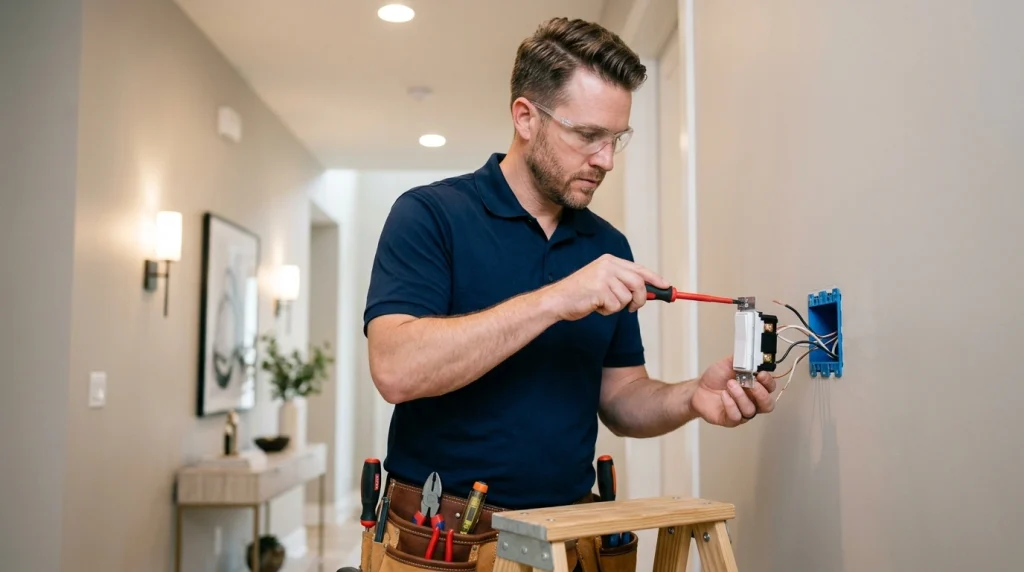
A smart lighting installer replaces your wall switches and dimmers with connected ones, wires them correctly (including 3-way setups and boxes with no neutral wire), and gets them working with your app, voice assistant, or hub. Smart bulbs are easy to screw in. Smart switches are a wiring job, and that’s where many DIY projects stall. This guide explains what an installer does, what it costs, when DIY is reasonable, and how to choose one. Or call us, and we’ll connect you with an independent licensed electrician who can do the wiring.
Free to call. Electricians are independent, licensed professionals who give their own quotes. Coverage varies by area, so tell us your location.
Safety note: if a switch, dimmer, or cover plate is warm, discolored, buzzing, or smells burnt, stop using it and turn off its breaker. If there is smoke or fire, leave the building and call 911. Always turn off the breaker before touching any switch wiring.
Key Takeaways
- Smart bulbs need no wiring, but they stop working if someone turns off the wall switch. Smart switches fix that.
- Many smart switches need a neutral wire in the box. Older homes often don’t have one, and some product lines are designed to work without it.
- Labor is often about $75 to $200 per switch for a straightforward swap, and more for 3-way switches, new neutral wiring, or box replacement.
- Electricians do the wiring. Complex whole-home programming sometimes needs an automation specialist, so ask who does what.
What Does a Smart Lighting Installer Do?
- Checks your switch boxes for a neutral wire, box size, wire condition, and the type of switch setup (single, 3-way, or 4-way).
- Installs smart switches and dimmers, including matching them to your bulbs and the load on each circuit.
- Wires 3-way and multi-location setups, using the main switch plus the companion or remote the system calls for.
- Solves no-neutral boxes by choosing a no-neutral product or running a new neutral where it’s practical.
- Replaces boxes that are too small, since smart switches are bulkier than standard toggles.
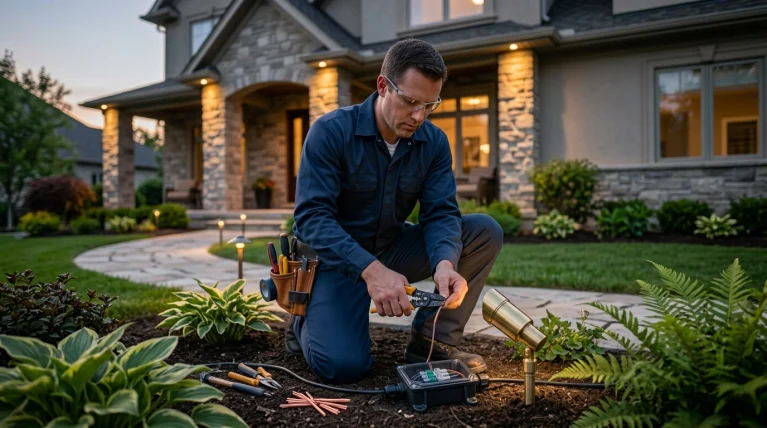
- Adds relays or modules for outdoor lighting, landscape transformers, and other hard-to-switch loads.
- Pairs devices with your hub, app, or voice assistant and sets up basic scenes and schedules. Large programming jobs may need a specialist.
- Tests everything, including manual wall control, dimming range, and flicker.
Smart Bulbs vs. Smart Switches vs. a Full System
| Smart bulbs | Smart switches and dimmers | Full lighting system | |
|---|---|---|---|
| Installation | Screw in. No wiring | Replaces the wall switch. Needs wiring | Switches, keypads, hubs, and programming |
| If someone flips the wall switch | The bulb loses power and smart control | Smart control stays on | Smart control stays on |
| Works with any bulb | No. The bulb is the smart part | Yes, if the bulb suits the dimmer | Yes, with matched dimmers |
| Cost to scale up | Grows with every bulb you buy | Per switch | Highest, but most polished |
| Best for | Lamps, renters, quick tests | Most owned homes | New builds, remodels, large homes |
Do You Need a Neutral Wire?
Most smart switches need a small amount of power all the time to stay connected to your network, and the neutral wire completes that circuit. Many older homes were wired with switch loops that bring only the hot and switched wires into the box, with no neutral. A professional will look inside the box and pick the right solution.
| What’s in the box | What it usually means | Typical solution |
|---|---|---|
| A bundle of white wires, connected together | A neutral is present | Most smart switches will work |
| No white wires, just a hot and a switched wire | No neutral at the switch | Use a no-neutral product, or run a neutral if practical |
| 3-way switch with several wires | Travelers between two or more switches | A matched main switch plus companion. Wiring varies |
| Cloth-covered wire or aluminum wiring | Older wiring that needs extra care | Have an electrician inspect it before adding devices |
| A crowded or shallow box | No room for a bulkier smart switch | Replace it with a larger box |
Some product lines, including Lutron’s Caséta dimmers, are designed to work without a neutral. Always check the specific model’s requirements, because they differ by brand and by switch type.
DIY or Hire a Smart Lighting Installer?
Swapping a basic switch is a common homeowner project. It’s reasonable when the breaker is off and verified dead, the box has a neutral, the wiring is modern, and you’re comfortable following the instructions. These situations are better handled by an electrician.
| Situation | DIY reasonable? |
|---|---|
| Single-pole switch, neutral present, modern wiring | Often yes, with the breaker off |
| 3-way or 4-way switch | Hire a pro unless experienced. Wiring varies |
| No neutral wire in the box | Hire a pro |
| Aluminum, cloth-covered, or knob-and-tube wiring | Hire a pro |
| Box is crowded, shallow, or has damaged wire insulation | Hire a pro |
| Warm, discolored, or buzzing existing switch | Hire a pro. There may be a loose connection |
| Many switches, or outdoor or landscape lighting | Hire a pro |
Smart Lighting Installation Cost
Prices vary by region, electrician, and the products you choose. These are typical U.S. ranges for planning, not quotes. Your electrician will give you a price in writing before work begins.
| Item | Typical cost |
|---|---|
| Smart switch or dimmer hardware (per switch) | $30 – $120 |
| Hub or bridge, if the system needs one | $50 – $150 |
| Labor, straightforward single-switch swap (per switch) | $75 – $200 |
| 3-way or multi-location setup (per location) | $100 – $300 |
| Replacing a too-small box | $100 – $300 per box |
| Running a new neutral to a switch box | Quote required (varies widely by wall access) |
| Whole-home system with keypads and programming | Quote required, often thousands of dollars |
Estimates only. Many electricians offer a lower per-switch price when you install several at once, and some charge a service-call minimum.
Electrician or Smart Home Specialist?
| Licensed electrician | Smart home or AV specialist | |
|---|---|---|
| Strength | Wiring, boxes, neutrals, circuits, code | Programming, scenes, multi-system integration |
| Best for | Switch and dimmer installation, outdoor lighting, fixing wiring problems | Large systems with keypads, shades, audio, and custom control |
| Licensing | Electrical license, where required by your state | Varies. Low-voltage work may be licensed differently |
| Typical combination | Many projects use an electrician for the wiring and the homeowner for the app setup | Large projects often use both |
For most homes, an electrician who has installed smart switches before is all you need. Ask them directly what they’ll set up and what they won’t.
Compatibility: Hubs, Voice Assistants, and LED Dimming
- Platforms: Many smart switches work with Apple Home, Google Home, Amazon Alexa, or Samsung SmartThings, directly or through a hub. Devices that support the Matter standard are meant to work across several of them. Check the box before you buy.
- Dimmer and bulb match: LED bulbs must be dimmable, and the dimmer must suit the load. A mismatch can cause buzzing, flicker, or a bulb that never fully turns off. Check the dimmer’s minimum and maximum load.
- If Wi-Fi goes down: A good smart switch still works at the wall. App, voice, and some schedules depend on your network or hub, though some systems run locally.
- Energy use: LED bulbs, dimming, and schedules can reduce lighting use, but savings depend on your habits. Don’t buy smart lighting just to cut the bill.
How to Choose a Smart Lighting Installer
- Verify the license with your state’s electrical licensing board, and ask for the number on the quote.
- Ask for proof of insurance.
- Ask about smart switch experience: which brands they’ve installed, and whether they handle no-neutral and 3-way boxes.
- Decide who buys the hardware. Many electricians prefer to supply it so they can stand behind the job. Others install what you bought. Settle it before the visit.
- Get a written quote listing each switch location, any box replacements, and any neutral wiring.
- Ask what happens after install: app pairing, scene setup, and a warranty on the labor.
How It Works
- Call us and tell us your location, how many switches, and what system you have or want.
- We check coverage and match you with an independent licensed electrician who serves your area, if we have one.
- Get a written quote after the electrician checks your switch boxes.
- Hire them directly if you’re happy with the price and timing.
We’re a referral service, not a contractor, and we’re expanding coverage area by area. See our home electrician service page for other jobs, or our guide to a local electrician in Huntsville if you’re in North Alabama. Also adding a new fan with the lighting? See ceiling fan installation.
Frequently Asked Questions
What does a smart lighting installer do?
They replace standard switches and dimmers with smart ones, wire them correctly (including 3-way and no-neutral boxes), replace boxes that are too small, and pair the devices with your app or hub. Large programming jobs may need a specialist.
How much does it cost to hire a smart lighting installer?
Labor for a straightforward switch swap is often about $75 to $200 per switch, plus the hardware. 3-way setups, box replacements, and new neutral wiring cost more, and whole-home systems are quoted individually.
Do smart switches need a neutral wire?
Many do. Some product lines are designed to work without one. Look inside the box, or ask an electrician to check, and compare the model’s requirements before you buy.
Will smart switches work if my Wi-Fi goes down?
You can still use the switch at the wall. App control, voice commands, and some schedules depend on your network or hub, though some systems run locally.
What’s the difference between smart bulbs and smart switches?
Smart bulbs contain the wireless part and need the wall switch left on. Smart switches replace the wall control, so every fixture on that circuit gets smart features with ordinary dimmable bulbs.
Can smart dimmers control my existing LED lights?
Often yes, if the LED fixtures or bulbs are dimmable and compatible with the dimmer type. A mismatch can cause buzzing or flicker, so check the dimmer’s load range and compatibility list.
Can I install a smart switch myself?
Some homeowners do for a basic single switch with a neutral and modern wiring, with the breaker off. 3-way switches, no-neutral boxes, old wiring, and crowded boxes are better left to an electrician.
Are the electricians licensed and insured?
We refer you to independent electricians who are licensed to work in their state. Ask for their license number and proof of insurance, and verify the license with your state board.
Ready to Hire a Smart Lighting Installer?
One call gets you matched with a licensed electrician who can check your switch boxes and give you a written quote. Have your location, the number of switches, and your preferred system or brand ready.
One Comment
Comments are closed.