
Why Would a Wall Socket Stop Working? 9 Causes & Fixes
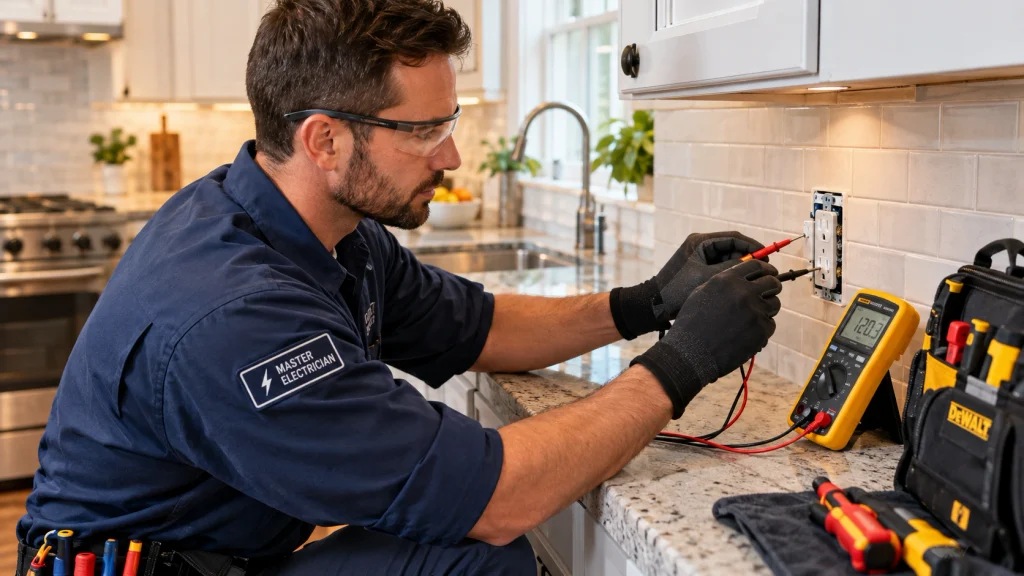
Why Would a Wall Socket Stop Working? 9 Causes and What to Do
Updated October 2026
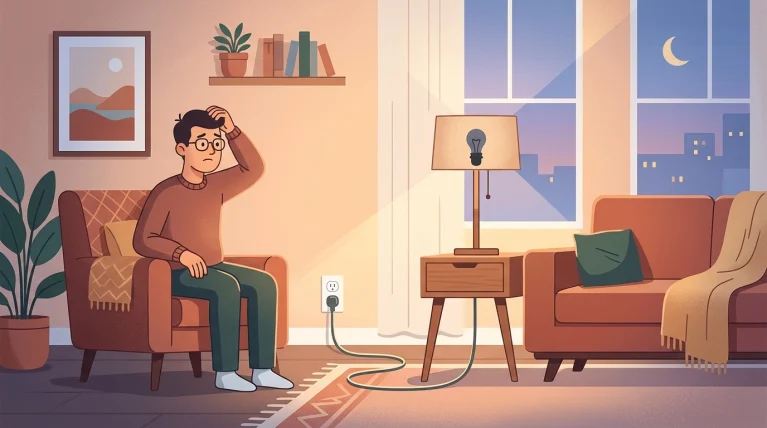
You plug something in and nothing happens. So why would a wall socket stop working all of a sudden? The most common causes are a tripped breaker, a tripped GFCI outlet somewhere else in the house, or a loose or worn connection inside the outlet. Some are safe to check yourself in a few minutes. Others point to a wiring problem that needs a licensed electrician. This guide walks through both.
Stop and call for help if you see or smell any of these: burning smell, smoke, scorch marks, a buzzing or crackling sound, or an outlet that’s hot to the touch. Don’t use the outlet. If there is smoke or fire, leave the area and call 911 first.
Free to call. Electricians are independent, licensed professionals who give their own quotes.
Quick Answer: The Most Likely Causes
- A tripped circuit breaker (or a blown fuse in an older home)
- A tripped GFCI outlet that also protects other outlets
- A loose wire or a failed “backstab” connection behind the outlet
- A worn-out or damaged outlet
9 Reasons Why a Wall Socket Stops Working
1. A Tripped Circuit Breaker
An overload or short circuit makes the breaker trip to protect the wiring. The lever sits in the middle or “off” position. If it trips again right after you reset it, there is a real fault. Don’t keep forcing it.
2. A Tripped GFCI Outlet
A GFCI outlet in a bathroom, kitchen, garage, basement, or outdoors can protect other outlets down the line. When it trips, those outlets go dead too, even in another room. Press RESET on every GFCI outlet nearby.
3. A Tripped AFCI Breaker
Arc-fault (AFCI) breakers trip when they detect a dangerous arcing pattern, often from a damaged cord or a loose connection. They look like regular breakers with a test button. A repeat trip is a warning sign, not a nuisance.
4. A Blown Fuse (Older Homes)
If your home still has a fuse box, a blown fuse cuts power to its circuit. Replace it only with the same amperage. Never use a larger fuse, which is a fire hazard. A fuse box is also a good reason to ask about a panel upgrade.
5. A Switched Outlet
In many rooms, one outlet (often half of it) is controlled by a wall switch so you can turn a lamp on from the door. If the switch is off, that outlet is dead.
6. A Loose Connection or Failed “Backstab” Wire
Many outlets are wired by pushing the wire into a hole in the back (a “backstab”) instead of under a screw. Over time those connections can loosen, overheat, or fail, causing dead or flickering outlets. This one needs an electrician.
7. A Worn or Damaged Outlet
The internal contacts can wear out, so plugs fall out or make poor contact. Heat damage may leave brown or black marks. A worn outlet is usually a quick replacement, but the cause of the damage should be checked.
8. A Failure Upstream in the Circuit
Outlets are often wired one after another. If one outlet or junction box earlier in the chain has a loose connection, every outlet after it can lose power, even though they look fine.
9. Damaged Wiring or Moisture
A nail or screw through a wire, rodent damage, a water leak, or a flooded outdoor outlet can break the circuit or cause a short. Outdoor and garage outlets are most at risk.
Symptom Guide: What’s Probably Going On
| What you see | Likely cause | What to do |
|---|---|---|
| One outlet dead, rest of the room works | Loose or failed connection, worn outlet, or a switched outlet | Check the wall switch, then call an electrician |
| Several outlets dead, even in different rooms | Tripped GFCI or breaker, or an upstream failure | Reset GFCI outlets and the breaker, then call if it persists |
| Outlet works, then cuts out | Loose connection | Stop using it and call an electrician |
| Plugs fall out or feel loose | Worn contacts | Replace the outlet |
| Breaker trips again right after reset | Short circuit, ground fault, or overload | Don’t force it. Call an electrician |
| Warm, discolored, buzzing, or burning smell | Overheating or arcing | Turn off the breaker, don’t use it, and call right away |
Safe Steps You Can Try First
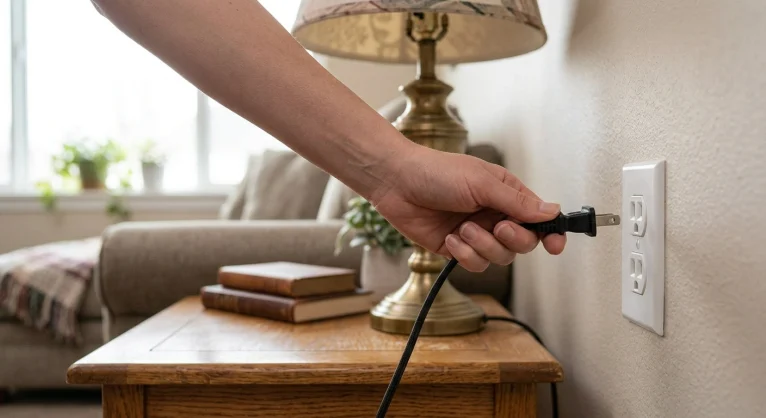
- Test the device. Plug it into an outlet you know works. If it still doesn’t power on, the problem is the device, not the outlet.
- Check for a switch. Flip nearby wall switches to see whether the outlet is switched.
- Reset every GFCI outlet nearby. Look in bathrooms, the kitchen, the garage, the basement, and outside. Press TEST, then RESET firmly.
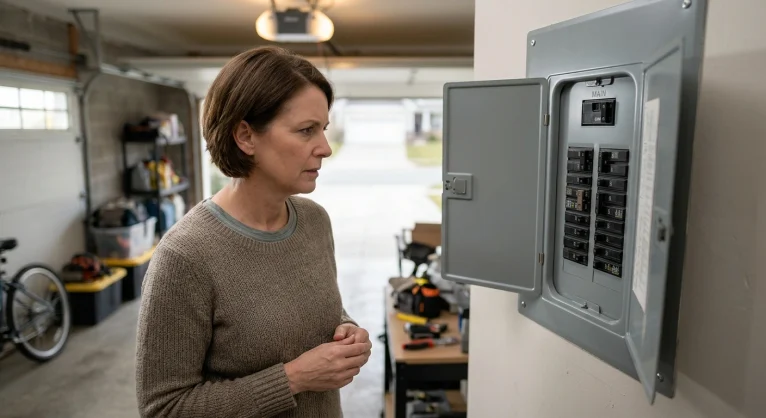
- Check the breaker panel. Look for a lever in the middle or “off” position. Push it fully to OFF, then back to ON. If your home has fuses, look for a blown one.
- Look, don’t touch. Check the outlet face for scorch marks, melted plastic, or discoloration. If you see any, leave the breaker off.
- Unplug everything from the circuit and reset once. If the breaker trips again with nothing plugged in, call an electrician.
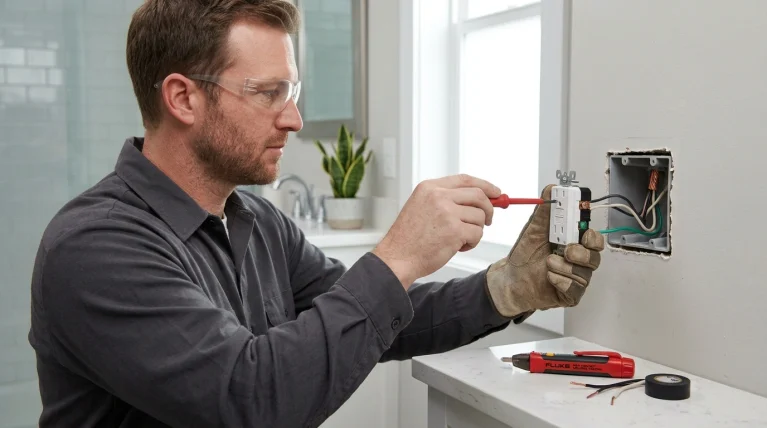
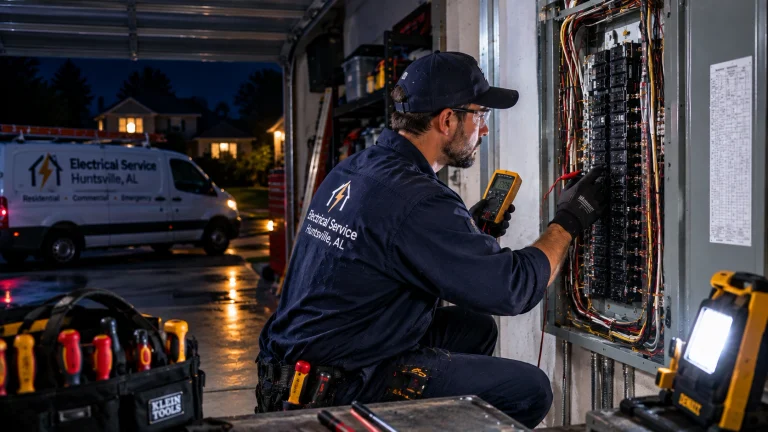
Don’t open the outlet or touch wiring unless you’re trained. The wires can be live even when the outlet looks dead. An electrician will confirm the power is off with a tester before touching anything.
When to Call an Electrician
- The breaker keeps tripping, or resetting GFCI outlets didn’t fix it.
- The outlet is warm, discolored, buzzing, or smells burnt.
- The outlet works on and off, or plugs fall out.
- Several outlets are dead and you can’t find a tripped device.
- Your home has a fuse box, two-prong outlets, or older wiring.
- You’ve had repeated dead outlets in different parts of the house. Consider a full electrical safety inspection.
Why You Shouldn’t Ignore a Dead Outlet
A dead outlet is sometimes harmless, like a tripped GFCI. But if the cause is a loose or damaged connection, it can overheat. Running extension cords from other rooms can overload those circuits too. If you aren’t sure why an outlet stopped working, treat it as a problem until someone checks it.
How Much Does It Cost to Fix a Dead Outlet?
Prices vary by location and the electrician. These are typical U.S. ranges for planning, not quotes. Your electrician will give you the real price first.
| Job | Typical cost |
|---|---|
| Service call or diagnosis | $100 – $250 |
| Replace a standard outlet | $100 – $250 |
| Replace a GFCI outlet | $100 – $300 |
| Replace a breaker | $150 – $400 |
| Repair damaged or hidden wiring | Quote required (varies widely) |
Estimates only. Hard-to-reach wiring, older homes, and multiple outlets can cost more.
How to Choose an Electrician for Outlet Repair
- Ask for the license number and verify it with your state’s licensing board.
- Ask about insurance and request proof.
- Ask for a price before they start, and what it includes.
- Ask whether they’ll find the cause, not just swap the outlet.
- Ask about a warranty on parts and labor.
How It Works
- Call us and describe what’s dead and what you’ve tried.
- Get matched with an independent licensed electrician who serves your area.
- Get a quote from the electrician after they check the outlet and circuit.
- Hire them directly if you’re happy with the price and timing.
For other electrical work, see our home electrician service page. In North Alabama, see our guide to a local electrician in Huntsville.
Frequently Asked Questions
Why would a wall socket stop working if the breaker isn’t tripped?
Common causes are a tripped GFCI outlet elsewhere on the same circuit, a loose or failed connection behind the outlet, a switched outlet that’s turned off, or a worn-out outlet.
Why would one outlet stop working but not the others?
Often it’s the outlet itself, such as worn contacts or a loose wire connection. It can also be a switched outlet. If it’s the only dead one, check the wall switch first.
Can a dead outlet be a fire hazard?
It can be. A dead outlet from a tripped GFCI is usually harmless, but one caused by a loose connection or damaged wiring can overheat. If it’s warm, discolored, buzzing, or smells burnt, stop using it and call an electrician.
How do I reset a GFCI outlet?
Press the TEST button, then press RESET firmly. If it won’t reset, or trips again, call an electrician.
How much does it cost to fix a dead outlet?
Replacing an outlet often costs about $100 to $250, and a service call is often similar. Wiring repairs cost more. Get a quote before work starts.
Can I replace an outlet myself?
Some homeowners do, but it means working with live circuits, and a dead outlet may have a wiring fault behind it. If you aren’t trained, call a licensed electrician. Local rules on DIY electrical work also vary.
Are the electricians licensed and insured?
We refer you to independent electricians who are licensed to work in their state. Ask for their license number and proof of insurance, and verify the license with your state board.
Need Help With a Dead Outlet?
If you’ve checked the breaker and the GFCI outlets and the outlet is still dead, or it’s warm, noisy, or discolored, let a licensed electrician find the cause. One call gets you matched with one near you.
2 Comments
Comments are closed.